

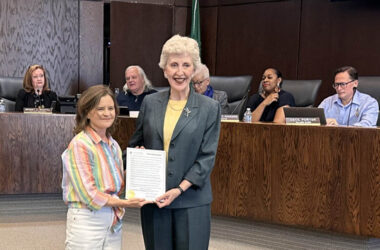
(Correction: This story was updated to recognize Judy Johnson as the coordinator of the plant sale.)
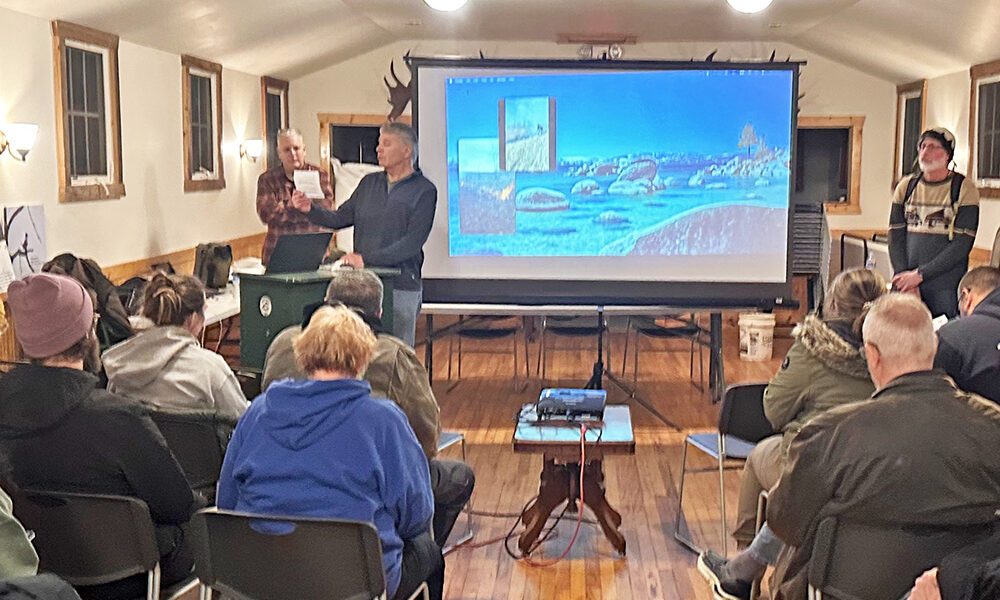
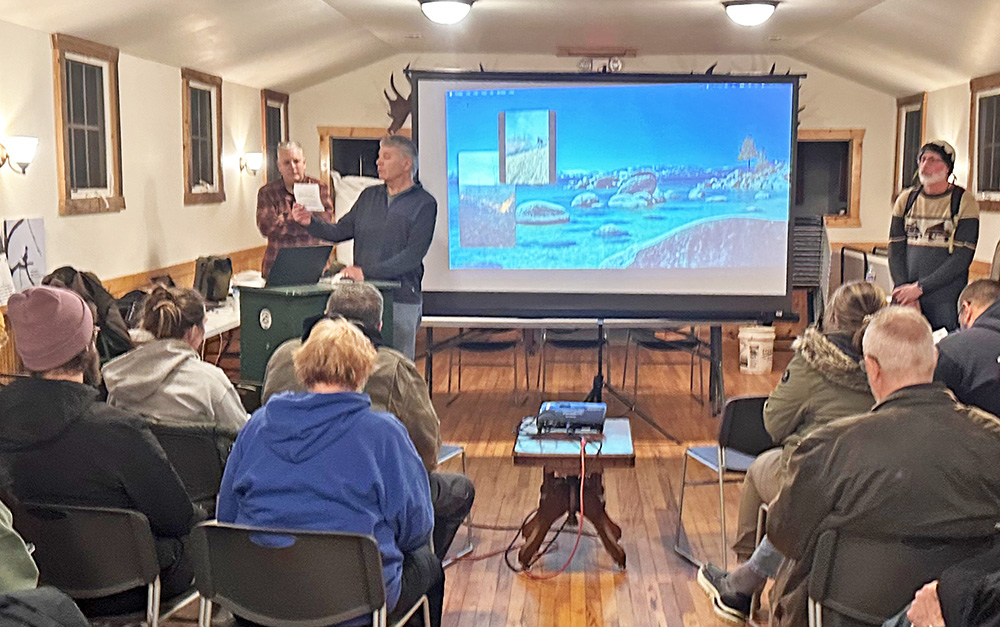
A magnolia sapling secured to his back — what he describes as his “emotional support tree” — accompanied Tristan Shaw as he addressed residents at Homewood Izaak Walton Preserve during this year’s Native Plant Sale presentation on Thursday, Feb. 26.
“I’m just here to talk about native plants today,” Shaw said.
Shaw, co-owner of Possibility Place Nursery, led the annual educational talk ahead of the spring plant sale hosted by Homewood Izaak Walton Preserve and Thorn Creek Audubon, two nonprofit organizations working to promote habitat restoration and conservation in the area.
The annual sale serves as a fundraiser for both groups, though organizers emphasize that ecological impact — not profit — is the primary goal.
Last year, the sale generated approximately $12,600 in plant sales. Thorn Creek Audubon realized about $1,800 in profit, while Izaak Walton’s share came in the form of roughly $1,800 worth of plants purchased through the sale and installed within the preserve.
“Neither organization makes much money,” said Judy Johnson, plant sale coordinator and board member for both groups. “We are more interested in native plants being available for wildlife. The plant sale is also an opportunity to interact with the community and tell them the importance of native plants.”
Izaak Walton uses its proceeds to maintain the preserve’s natural areas and structures. Thorn Creek Audubon directs its funds toward education and bird studies, installation of native gardens — often at schools — and projects such as the chimney swift tower located at Izaak Walton Preserve.
Pre-orders for the 2026 sale were due March 1. Plant pickup is scheduled for Saturday, May 16, from 9 a.m. to 2 p.m. and Sunday, May 17, from 9 a.m. to noon at Homewood Izaak Walton Preserve, 1100 Ridge Road in Homewood. Plants also will be delivered to Homewood and Flossmoor customers on Friday, May 15 after 1 p.m.
Plants will be available for sale on May 16 and 17 at the preserve.
The sale is coordinated entirely by volunteers from both organizations, led by Judy Johnson.
Dave Ward, a retired golf course superintendent and longtime native plant advocate, has been a supporter of the sale for about a decade.
Plants — often thousands at a time — are delivered from the nursery and sorted by volunteers before pre-orders are distributed and the open sale begins.
“We’re just volunteers,” Ward said. “It takes three days to get everything ready.”
All plants in the sale are sourced from Possibility Place Nursery, a regional grower specializing in true native species grown without pesticides.
Johnson noted that many commercially sold plants are treated with systemic pesticides that can harm pollinators, or are cultivars bred for appearance rather than ecological value.
One popular example is butterfly weed, a bright orange milkweed that supports monarch butterflies. Johnson recalled a year when monarch caterpillars overtook the greenhouse crop.
“They called us and said, ‘We’re sorry, no butterfly weed this year,’” she said. “Monarchs got into their greenhouse and laid a bunch of caterpillars, and they said, ‘We’re not going to kill the monarchs.’”
Shaw explained that many mass-produced ornamental plants are genetically identical clones that may produce little nectar or pollen.
“Most people, even though we live in a prairie state, do not interact with native plants on a daily basis,” Shaw said. “They do not see birds and butterflies in a meaningful way.”
Native plants grown from seed provide greater genetic diversity and are better adapted to local conditions, he said.
“If you’re going to plant something in your yard,” Shaw added, “an oak tree would be a great place to start.”
Oaks are considered a keystone species, supporting hundreds of insect species that in turn feed birds and other wildlife.
Residents say they return year after year for both the plants and the education.
“We always try to come out to these programs,” said Stewart Anderson, who has attended multiple sales. “They’re really informative and pretty well attended.”
Barbara Ferrari, a 20-year neighborhood resident and board member at Izaak Walton, said interest continues to grow through member newsletters and community outreach.
Organizers say even after the pre-order deadline passes, the broader goal remains the same: encouraging residents to rethink landscaping and make room for native species that support local ecosystems.
For residents looking to restore habitat, reduce lawn space or simply attract more birds and butterflies, the annual sale offers a local starting point — rooted in the region’s own ecology.