

Growing up in the 1930s and ‘40s in Harvey, Illinois, Elaine Wolf Egdorf didn’t love history. There was no History Channel — and, as she readily admits, she wasn’t much interested in the past. But over time, one project after another, her devotion to service, community, and family led her to uncover Homewood’s origin story and preserve it for future generations.
Elaine moved to Homewood in 1958 after marrying Gerald “Gerry” Egdorf, a Homewood native she had met at Thornton Township High School. They graduated in 1954, then took separate paths — Gerry to the Navy, Elaine to Northern Illinois University for a teaching degree — before reuniting, settling in Homewood, and raising three children: Brett, Jeri, and Connie.
Though she embraced life as a homemaker, it quickly became clear she was anything but conventional.
Service had always pulled at her. Even in college, she led Girl Scout troops: “I even had a Brownie group when I was in college,” she said, laughing. “Sometimes we had to cut meetings short because of my dorm curfew.” That early commitment grew into 27 years of Girl Scout leadership.
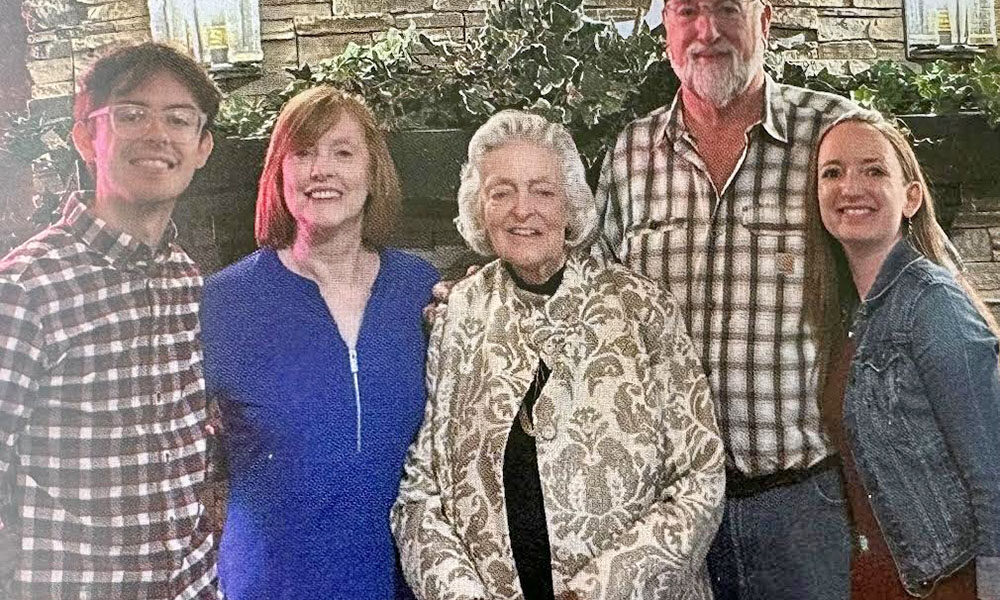
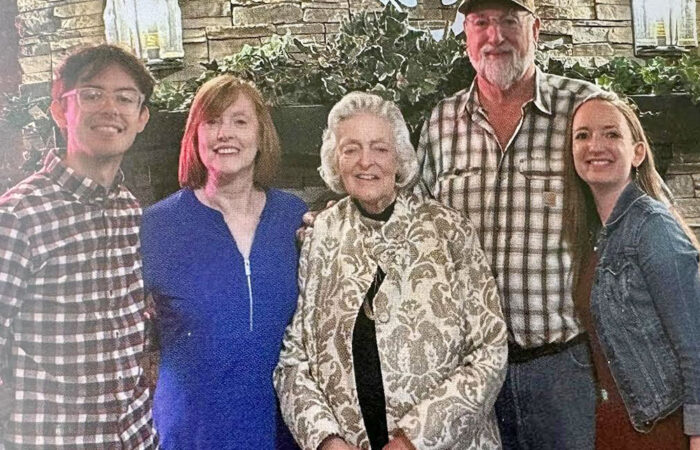 Friends and relatives from all over the US gathered in Crete last November to celebrate Elaine Egdorf’s 90th birthday. From left: grandson Louis Martinez, daughter Jeri Whalen, Egdorf, son Brett, and granddaughter Megan Whalen. (Provided photo)
Her fascination with history began almost by accident. Walking through town with her children, she found herself wondering about the streets, buildings, and names around her. Casual curiosity soon grew into a mission: to make Homewood’s past visible, even as she helped shape its future.
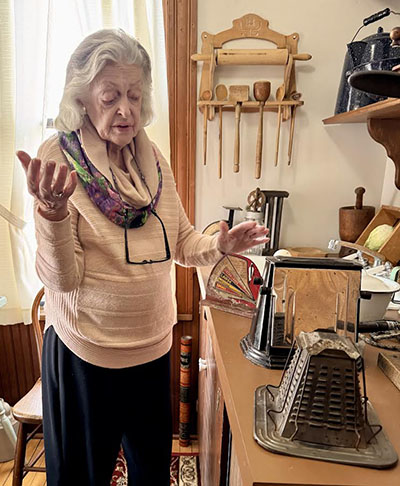
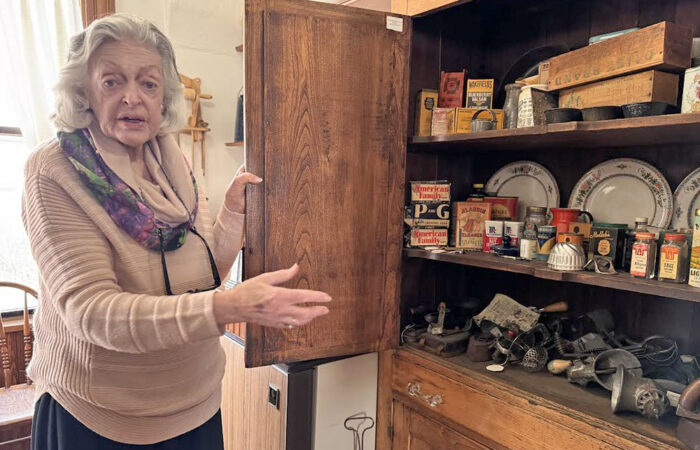
spice and soap containers from products used
in the early 19th century. (Karen Torme Olson)
Her interest in the village’s history deepened through Gerry’s passion for firefighting. Though he worked for Illinois Bell, he served as a volunteer firefighter, and his stories about the buildings he helped save opened a new window into the village’s past.
“I came to know a lot about the village through him,” Elaine said.
The couple’s dedication to community intensified when their youngest daughter, Connie, was diagnosed with childhood diabetes at age four.
(Karen Torme Olson)
“In those days, the local pediatricians had no idea what to do,” Elaine recalled. “She would be unconscious, and my husband would have to call the police to take them to the emergency room in the middle of the night. It was a terrible time.”
Gerry applied to Homewood’s first EMT class but was rejected because he was a volunteer. Eventually, he and two firefighters secured scholarships for EMT training at Ingalls Hospital.
“Gerry became Homewood’s first volunteer EMT because of our daughter,” Elaine said. Gerry Egdorf died in 2000.
Realizing other families were struggling too, the Egdorfs founded the first far south suburban chapter of the diabetes society. They also launched a diabetes bike ride from Homewood to Park Forest — “as many times back and forth as riders wanted” — to raise funds. “My son did over 100 miles!” Elaine said.
Her curiosity about Homewood’s past never waned. When a village trustee mentioned that Homewood needed a historical society — and that a local resident in poor health had been collecting materials — Elaine stepped in.
“I knew nothing about starting a historical society,” she said. “I started doing all the legwork for the woman and never expected to get this involved.”
On May 10, 1980, she organized the first meeting of what would become the Homewood Historical Society (HHS) at Merchants Park.
“I didn’t know if anyone would come,” she said. Her daughters made cookies and lemonade. The turnout was so large they had to borrow chairs from nearby offices. The Homewood librarian brought slides Elaine had never seen.
That meeting became the foundation of a thriving organization. Under Elaine’s leadership, the HHS grew its membership, built a robust archive of documents and photographs, and championed the preservation of local landmarks.
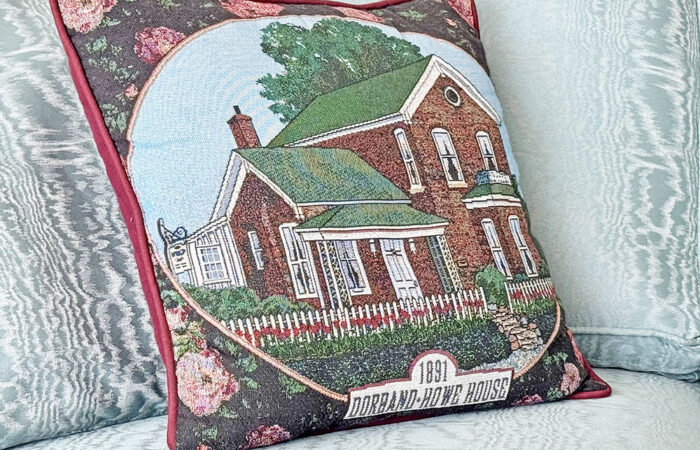
Among her proudest achievements is securing the 19th‑century workman’s cottage at 2035 W. 183rd Street as the HHS headquarters and the Dorband‑Howe House Museum.
Elaine’s civic reach extends well beyond Homewood. She is a founding member of the South Suburban Heritage Association, a former vice president and director of the Illinois State Historical Society, and the 2017 recipient of its Lifetime Achievement Award.
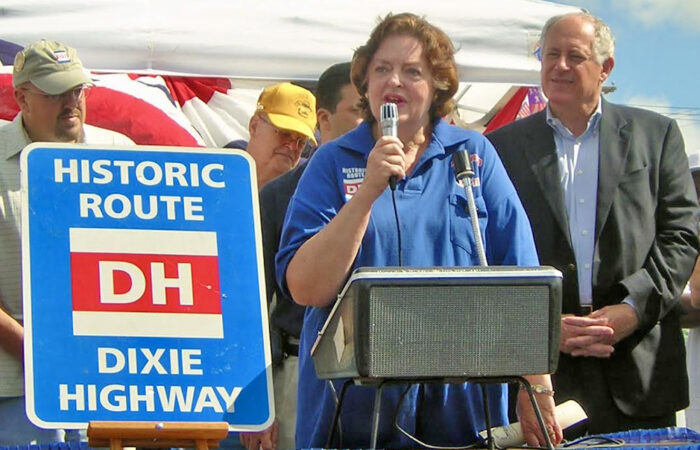
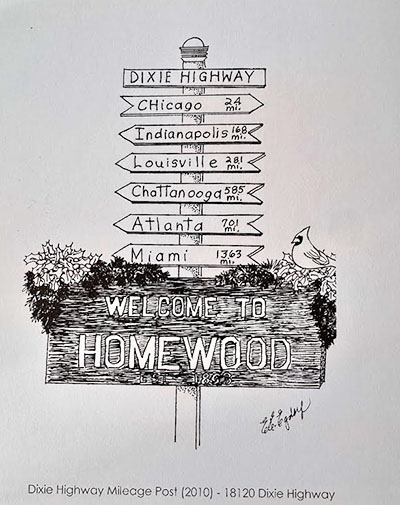
One of her favorite projects is Drivin’ the Dixie, the vintage car road excursion she launched in 2002. What began as a classic car rally evolved into a progressive road trip along the Dixie Highway, with drivers collecting passport stamps at each town from Blue Island to Momence and meeting a companion caravan from Danville.
“It was so much fun,” Elaine said. The event paused during the pandemic, but there is talk of bringing it back.
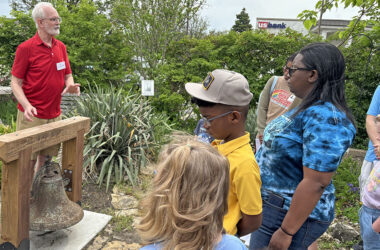
Even now, Elaine remains a vital resource for residents and researchers. Visitors to the Dorband‑Howe House may find her demonstrating a manual rug beater or an early 20th‑century toaster — ordinary objects animated by her stories.
Last year, her family hosted a 90th birthday celebration for her at the Evil Horse Alehouse in Crete. Nearly 100 people attended, traveling from Oregon, Florida and New Jersey.
“My granddaughter Megan and her friend from Willow School made all the food, including the desserts,” Elaine said. “I couldn’t believe how many people came.”
Homewood’s strong sense of identity owes much to Elaine Egdorf’s vision and care. The archives she built and the stories she continues to share help the community understand how it became the close‑knit town it is today.
Elaine still attends many local events, chatting with neighbors or pointing out where a long‑gone landmark once stood. She’s quick to credit others for the success of the Homewood Historical Society, but those who know her understand the truth.
“Elaine didn’t just start the Homewood Historical Society,” said current HHS president Bob Anderson. “She is the Homewood Historical Society.”
Elaine still serves on the HHS board, with a year left in her term, and she shows no signs of slowing down.
“We’ll see what comes next,” she said with a wry smile.