
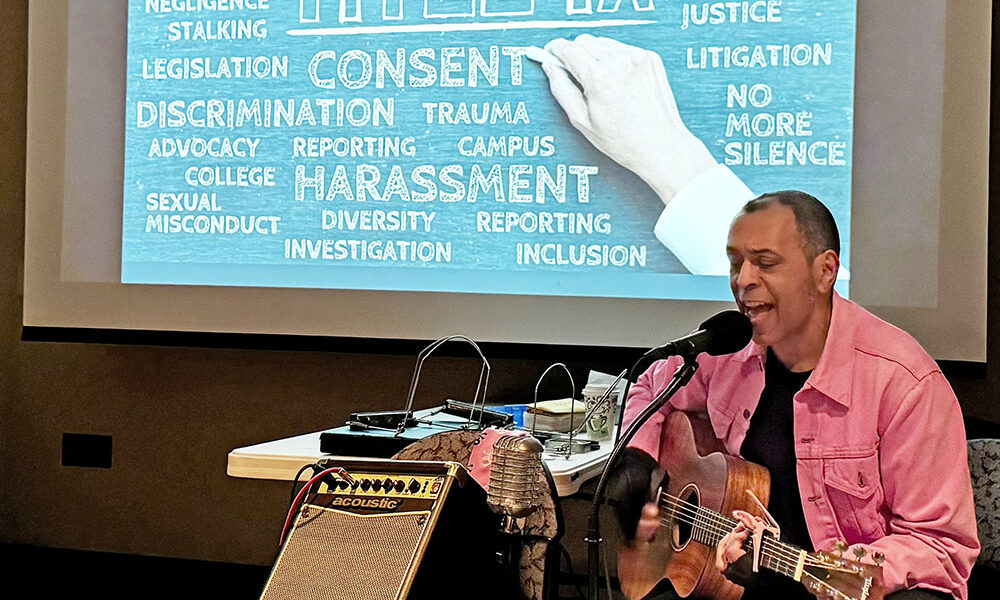

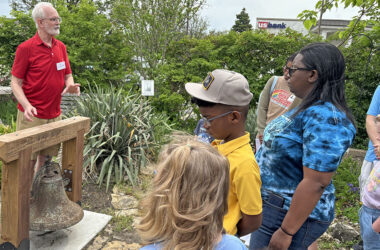

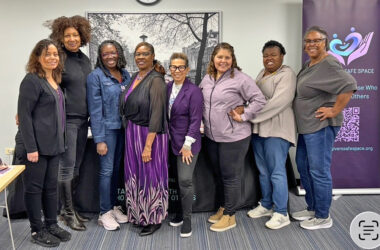
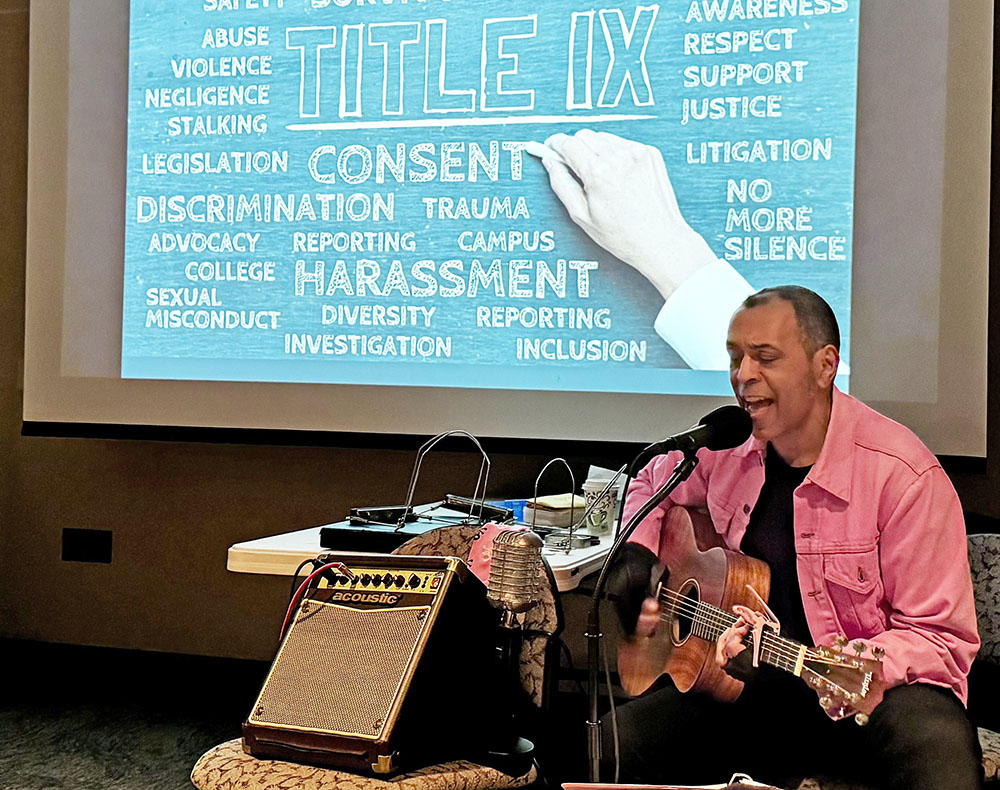
Most of the women who attended troubadour Clarence Goodman’s presentation, “As We Go Marching, Marching: Songs of the Women’s Movement,” at the Flossmoor Library on March 25 already were well-acquainted with the long struggle for women’s equality in the United States and beyond. Many had lived through key decades of the movement. Some sang along to the familiar anthems of the era, and one audience member revealed a deeply personal connection to one of the movement’s pioneers.
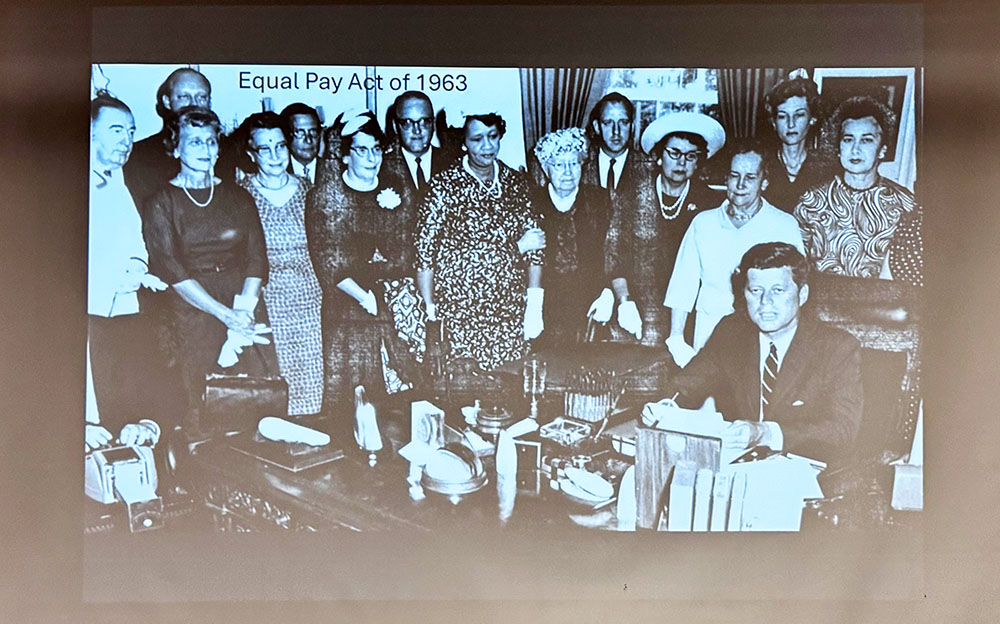
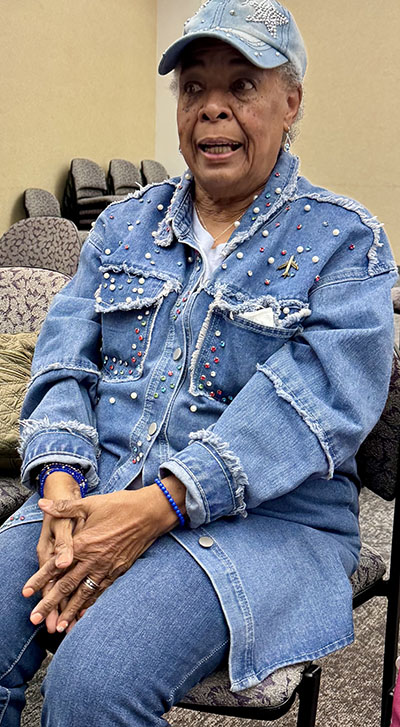
“That’s my aunt!” exclaimed Saundra Lawson Brunson of Matteson as a photograph appeared on the screen behind Goodman. The image showed President John F. Kennedy signing the Equal Pay Act of 1963 while surrounded by a group of women.
“Her name is Marjorie McKenzie Lawson, and she was a juvie judge,” Brunson said.
McKenzie Lawson was indeed a trailblazer — the first Black female judge in Washington D.C. Appointed to the Juvenile Court by Kennedy, she also served as civil rights director for his presidential campaign.
“The modern women’s movement began in the latter part of the 19th century,” Goodman told the audience. “It grew around the fight for the right to vote. Women’s suffrage was a big deal in Britain at the time, and it became an even bigger movement in the U.S.”
He noted that British composer and suffragette Dame Ethel Mary Smyth wrote “The March of the Women,” widely regarded as the movement’s first theme song. It was the beginning of a musical tradition that carried the call for equality across decades.
From there, Goodman’s program unfolded as a blend of history, music, vintage photographs, and storytelling. Accompanying himself on guitar and harmonica, he performed his own arrangements of iconic songs such as Lesley Gore’s “You Don’t Own Me,” Dolly Parton’s “9 to 5,” Nancy Sinatra’s “These Boots Are Made for Walking,” Aretha Franklin’s “Respect,” and Helen Reddy’s “I Am Woman.” Each song, he noted, “is part of the soundtrack of the Women’s Movement.”
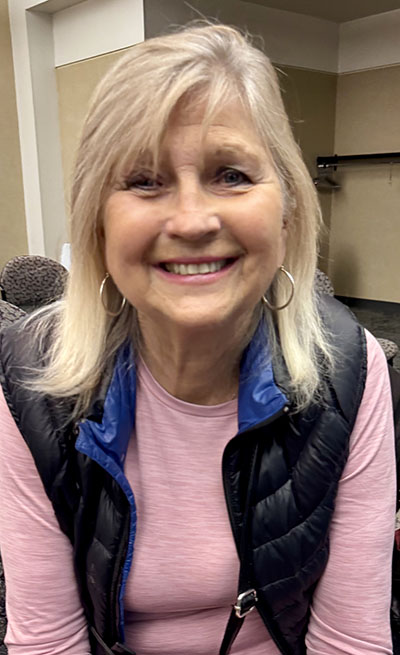
Flossmoor resident Becky Strupeck, who remembers the activism of the 1970s and the push for the Equal Rights Amendment, agreed that the fight for equality continues. She cited a recent example involving rangers at Muir Woods National Monument who were reportedly ordered to remove informational signs mentioning women or African Americans from the thousand-year-old redwoods.
“Unfortunately, misogyny and opposition to women’s equality remain strong forces in society,” Goodman said. “Being male is the ultimate privilege in our society today.”
For more information about Clarence Goodman’s presentations, visit clarencegoodman.wixsite.com/clarencegoodman.