
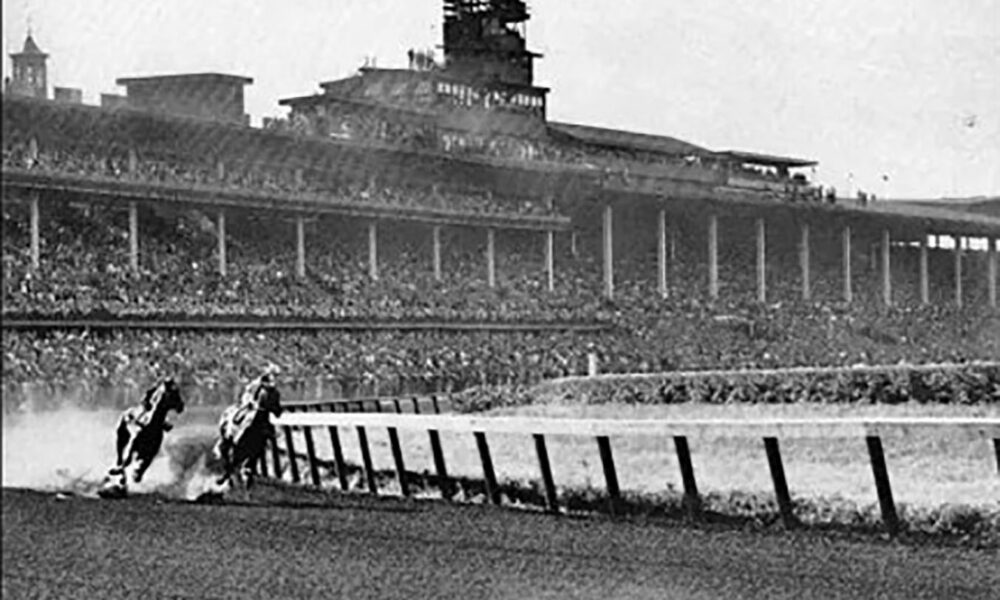
Nashua (right) and Swaps round the first turn at the Washington Park Racetrack during their historic match race. (Provided photo/Homewood Historical Society)
Local News

Remembering Washington Park: The Southland’s jewel for horses and stars

Jerry Goldstein
Jerry Goldstein

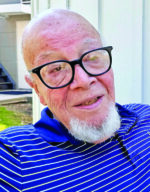
Flossmoor resident Jerry Goldstein says he has loved horses and horseracing since he attended his first race with his father at the former Washington Park Racetrack in Homewood at the age of seven.

The experience made such an impression on Goldstein that he became a lifelong fan of the sport and years later attended the track’s most famous event, “The Great Match Race” on Aug. 31, 1955, between Swaps, a chestnut from the West Coast ridden by jockey Willie Shoemaker and Nashua, a powerhouse from the East Coast ridden by jockey Eddie Arcaro.

“That day there was just so much excitement,” he said.  “There were more than 35,000 people there, and it was hard to get to the betting windows and to get refreshments.”

Goldstein, now 93, is not the only person who remembers and misses Washington Park Racetrack.

Nashua (right) and Swaps round the first turn at the Washington Park Racetrack during their historic match race. (Provided photo/Homewood Historical Society)
Nashua (right) and Swaps round the first turn at the Washington Park Racetrack
during their historic match race. (Provided photo/Homewood Historical Society)

On Sept. 10, Robert L. (Bob) Anderson, president of the Homewood Historical Society (HHS) recalled the glory days of thoroughbred racing in Homewood via a presentation to a full house at the Homewood Library.  His presentation recalled the Swaps vs. Nashua match race that drew racing fans to Homewood and that took a 50% share of TV viewers, all to see the two celebrity horses go head-to-head for a winner-take-all $100,000 purse.

Anderson added that the winning jockey got a 10% cut of the purse while the losing jockey got $35.

“Both of these horses were phenomenally successful, and each was named “Horse of the Year” in successive years [1955 and 1956],” Anderson said.

“So why did this matter? Why was a race between these two so important?” Anderson asked.
He said that in 1955, Swaps had won the Kentucky Derby but was pulled from the other two legs of the Triple Crown — the Preakness Stakes and the Belmont Stakes — both of which were won by Nashua. Racing fans demanded a head-to-head match race between the two horses from opposite coasts and Washington Park in the Midwest was the logical choice for the match race.

That year, horseracing was the number one spectator sport in America, and its superfans included many celebrities who were deeply involved in thoroughbred racing.

Bing Crosby and Pat O’Brien built their own tracks on the West Coast where A-list stars like Bob and Dolores Hope, the Duke and Duchess of Windsor, Jimmy Durante, Don Ameche and many others went to watch the ponies.

A match race with the panache of a race between Nashua and Swaps was a natural draw for both fans of the sport and celebrities who liked to be in the spotlight at major events. Anderson also said there was a lot of “horse-trading” going on to bring the big race to Washington Park and that Don Ameche was one of the power brokers who sealed the deal.

Besides the draw of a celebrity crowd, convenient transportation to the park also helped build the crowd at the track: The Illinois Central [IC-now Metra] ran a route that stopped steps away from the Washington Park entry gate, bringing in people from the downtown Chicago Randolph Street station with ease.

Nashua won that match race and “Horse of the Year” title for 1955 while Swaps won “Horse of the Year” for 1956. But Goldstein said that besides the excitement of witnessing such a high-stakes race, the memory that sticks with him the most is witnessing Shoemaker’s decision to ease up on Swaps once it became clear that his mount couldn’t win the match race against Nashua.

Firefighters stand helpless to douse the flames that consumed Washington Park’s clubhouse and other structures the night of Feb. 5, 1977. (Provided photo/Homewood Historical Society)
Nothing but rubble was left of Washington Park Racetrack on Feb. 6, 1977, the morning after a fire raced through its clubhouse. (Provided photo/Homewood Historical Society)

“I’ve seen so many races where jockeys know they can’t win at some point, yet they punish their horse with the whip right to the end. Shoemaker knew he was beaten with about an eighth of a mile to go and decided there was no sense of using his whip on Swaps that far into the race.”

Goldstein, a retired insurance executive, said he has stayed involved with horses one way or another his entire life — as a horse owner, a harness and thoroughbred racing fan, and through off-track betting. “They had harness racing at night at Washington Park and my neighbor and I could hear the bugle blow for a call to the races. We would leave our houses at 9:30 p.m. for the last four races.” Goldstein said that now he stays involved in the sport mostly via off-track betting.

Another of Goldstein’s most vivid memories of Washington Park is that of a cold February night when he was returning from a trip to Florida and landing at O’Hare International Airport.
“That night the sky was lit up in orange light. I said, ‘My God, what’s going on out there?’”

The date was Feb. 5, 1977, and the orange sky was his beloved Washington Park going up in flames.

For more information on the fire, see the late Jim Wright’s 2017 story in the Chronicle.

Advertisement
Popular stories < 7 days

Newsletter

Meet the Candidates: U.S. Senate

Conversations with the Chronicle