

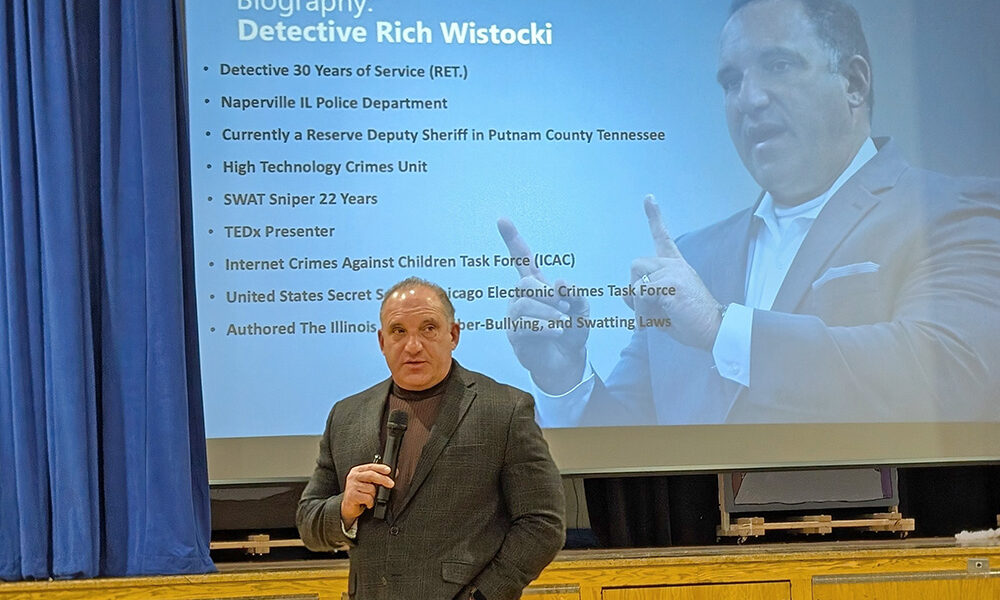




The internet and social media can lead kids into unsafe sites and activities. Cybercrime expert Richard Wistocki shared tips on how to protect them from digital threats during a Nov. 11 program hosted by Flossmoor School District 161.
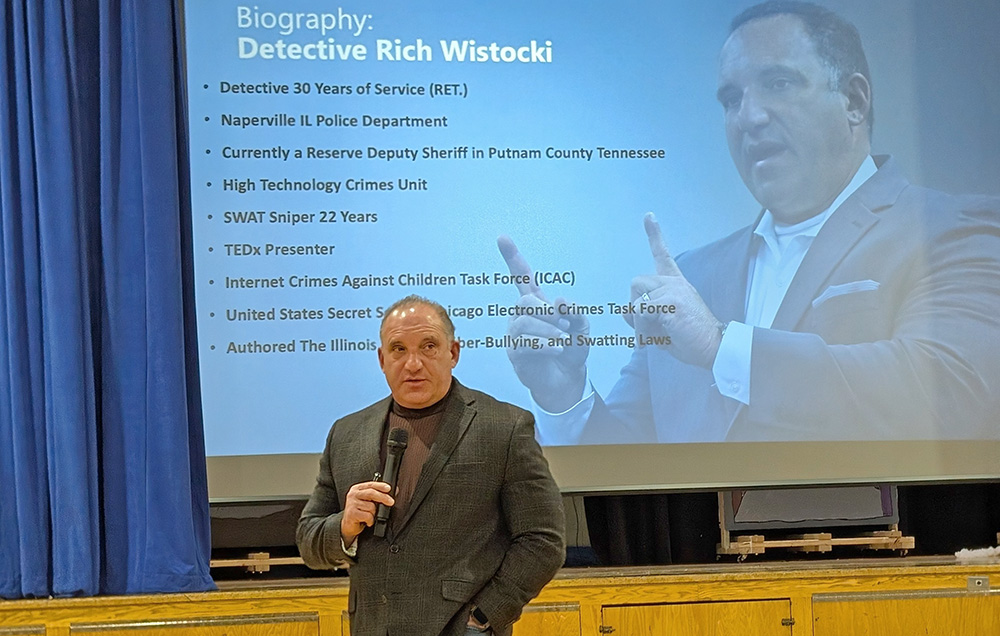
(Chris Weber/H-F Chronicle)
Wistocki is a retired detective and a nationally recognized expert on technology-related crime with a long career in law enforcement. He also works as a consultant and instructor when he is not coaching parents and students on how to stay safe online.
Drawing on his decades of experience, Wistocki provided parents with proactive strategies and real-world insights designed to help families better understand online safety and protect children from digital threats.
The information Wistocki shared with a group of about two dozen community members is sometimes frightening.
“One internet predator will have 250 victims in their lifetime if they aren’t stopped,” he said. He offered his contact information so that anyone who was a victim of a cybercrime could reach out to him for help.
Wistocki told parents that no offender is anonymous. If victims collect the correct data after a cybercrime, it helps law enforcement officials do their jobs and solve the crime. He recommended taking screenshots of all interactions, including email addresses, phone numbers, gamer tags and other details, and printing the images for the police. He also recommends saving all digital files on a portable thumb drive and providing it to investigators.
Victims of a cybercrime should take the time to write a detailed statement for law enforcement, Wistocki advised. He stressed that they should avoid reporting incidents on the website or to the social media company where the crime occurred. Actions such as deleting or banning accounts could destroy evidence.
Wistocki reminded parents that they are responsible for their children’s behavior in real life and online, and that they should be able to see what their kids are doing on the internet at all times.
“If your child ever changes the access code on their device to lock you out, you have to ask yourself why they are doing that,” Wistocki said. “Why did they do it? Because they are hiding something from you.”
While this stance may seem authoritarian to some parents, Wistocki also recommends they use what he calls a “golden ticket” policy. Because kids rarely tell their parents when they make a mistake online, Wistocki says parents should create a policy that makes their children feel comfortable asking for help. By using the golden ticket when telling their parents about being bullied, exploited or extorted online, the teen knows they won’t be in trouble and the parents will have enough information to get them help.
Wistocki explained that internet gaming platforms are the most dangerous places for kids online because parents often don’t realize their children can communicate with strangers in the games.
“Robox is the worst place” for a child right now, Wistocki said. “There are more predators there than any other game.”
He said parents should set up accounts with age-appropriate restrictions for their child, use other safety and privacy features and remain vigilant about their children’s online activity.
Another strategy Wistocki told parents about was cell phone monitoring technology by a company called Bark. Bark makes devices and application software that help parents monitor what their kids are doing online.
More information about Wistocki can be found at besureconsulting.com.
