

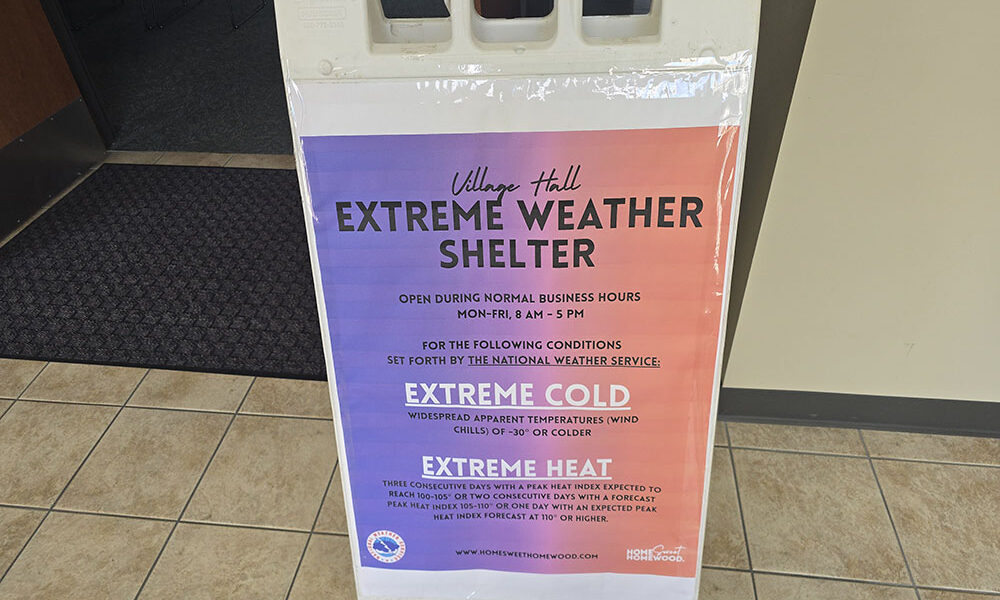

The heat warning issued by the National Weather Service is set to expire at 10 p.m. Wednesday, July 1, with temperatures Tuesday and Wednesday in the mid-90s and heat indices of up to 105 degrees. Temperatures are expected to remain in the 90s Thursday.
Under these conditions, the Village of Homewood makes available the board room on the lower level of village hall, 2020 Chestnut Road, as an extreme weather shelter during business hours, 8 a.m. to 5 p.m. Monday through Friday.

Flossmoor Police Department lobby, open 24 hours a day at 2800 Flossmoor Road, is available as a cooling center.
Irwin Community Center at 18120 Highland Ave. in Homewood is also available as a cooling center from 8 a.m. to 5 p.m.
The state issued an advisory Monday, June 29, urging residents to take precautions during the heat wave.
Prolonged periods of extreme heat significantly increase health and safety risks, particularly for vulnerable populations and those spending extended time outdoors, according to state officials.
“Preparedness is key. Limit time outdoors during peak heat, check in on neighbors and those who may need extra assistance, and know where your local cooling centers are,” said Theodore ‘Ted’ Berger, Director of the Illinois Emergency Management Agency and Office of Homeland Security.
- Drink plenty of water and avoid alcohol. Beverages with electrolytes can help protect against heat stress.
- Apply sunscreen (SPF 30 or higher) every two hours.
- Wear lightweight, loose-fitting, and light-colored clothing.
- Take frequent breaks in shaded or air-conditioned locations.
- Never leave children, vulnerable adults, or pets in a vehicle, even for a short time.
- Limit outdoor activity, especially during the hottest parts of the day.
Illinois offers an extensive network of cooling centers to help residents stay safe during periods of extreme heat. Locations include state facilities, local government buildings, community centers, libraries and other public spaces designated to provide air conditioning and relief for anyone who needs it.
Cooling centers are open to all residents at no cost, and many operate extended hours during heat emergencies.
Cook County Animal and Rabies Control offered safety tips for pets during the heat wave.
- Do not leave your pet in a hot car: Even with the windows rolled down, studies have shown that the temperature inside the car can increase 15 degrees above the outside temperature. The law requires that any time the ambient temperature is above 78 degrees, you cannot leave your dog in a car.
- Keep your pets cool when outside: Pets can get dehydrated quickly when it’s hot or humid outdoors. All dogs should be provided with cool water and shade and should be monitored when outside. Animals with short coats or with white or tan fur are more susceptible to sunburn, especially on their noses.
- Consider a haircut: If your dog has a thick coat, consider a haircut for summer. Never shave your dog. The layers of a dog’s coat protect them from overheating and sunburn.
- Take care of your dog’s paws: Remember that asphalt and sidewalks are hotter than grass and dogs’ paw pads are highly sensitive to heat. Whenever possible, walk your dog on grass, dirt or gravel and avoid asphalt and concrete during a heat wave.
- Keep inside temperatures cool: Make sure your indoor pets have water and are comfortable when in the home. Don’t be alarmed if you see your cat sleeping somewhere odd, like the bathtub or the closet. Cats look for the coolest spot in the home.
- Ensure window screens are secure: Before opening any windows in your home this summer, make sure there is a screen installed. Keep windows without screens closed and ensure adjustable screens are tightly secured. Cats are curious by nature and an open window without a screen could pose a safety risk.
- Signs of heat stroke: Know the warning signs of heat stroke especially if your pet has been exposed to hot weather for a substantial amount of time. Symptoms include fatigue, excessive panting, disorientation, lethargy, discomfort, seizures and collapse. If your pet is experiencing any of these symptoms, seek veterinary help immediately.
- Animals with flat faces, such as pugs, bulldogs and Himalayan cats are more susceptible to heat stroke due to their decreased ability to pant and release heat as effectively. These pets should be kept in an air conditioned space as much as possible, along with pets who are elderly, overweight or have underlying heart or breathing issues.
If you see an animal in distress, call your local police department for assistance.


