

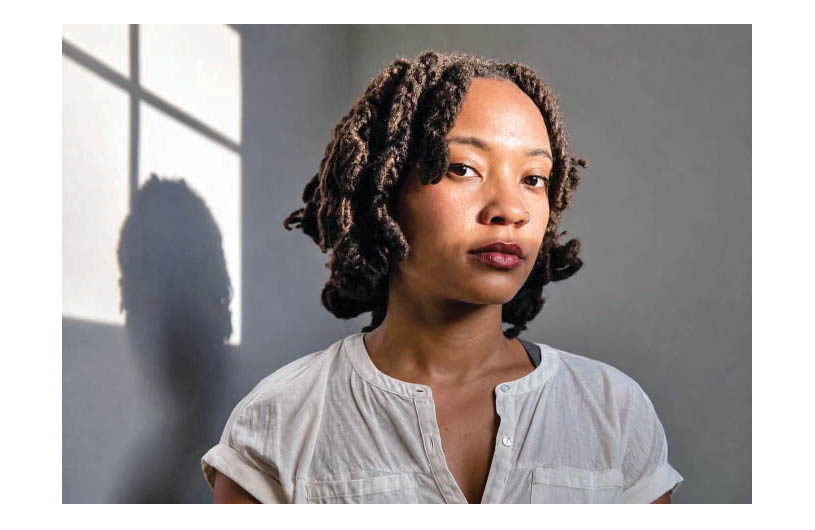


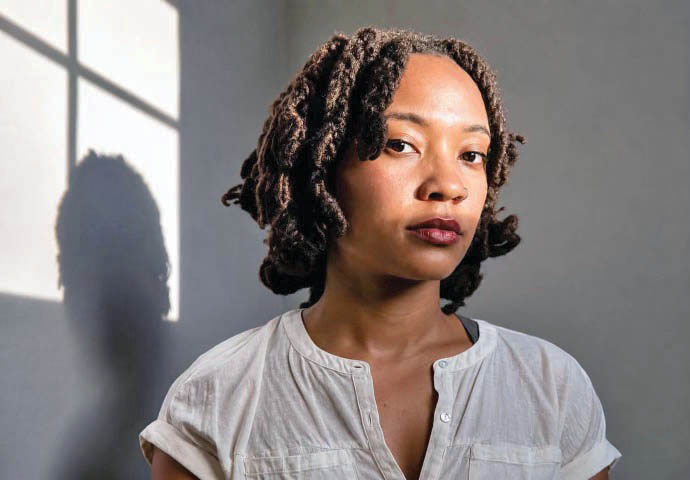
Janelle Dunlap is an accomplished artist, a researcher, the founder of a nonprofit, a cultural archivist, a former community gardener and a mother of two.
The Flossmoor resident’s job titles now include being one of the official beekeepers for the Obama Presidential Center in Chicago, which officially opens on June 19.
Dunlap will share those beekeeping duties with her mentor Thad Smith. Smith is the founder of
West Side Bee Boyz, which will serve as the vendor for the Obama Presidential Center beekeeping installation. Dunlap is the programs and education manager for West Side Bee Boyz.
“I’m thrilled to be supporting his beekeeping practice,” Dunlap said, noting that the center’s hives were installed in April.
“We’ve been asked to keep it simple,” she said. “Keep the bees alive and healthy.”
Visitors to the Obama Presidential Center can learn more about the beekeeping installation on the walking tour. Dunlap shared that she’s on the app for the walking tour, talking about the bees. She said she’s always looking for ways to connect people to nature.
“I’m someone who’s really big on supporting nature and natural systems,” she said.
Dunlap has a lot of experience working in nature and with bees. She served as the resident beekeeper at the Sweet Water Foundation at Washington Park. It was during her time there that she met another artist who introduced her to encaustic painting, an ancient form of art making where beeswax is used to make the paint, she said. Dunlap harvested wax from her bee colonies and created her own paint.
Her work has been shown in exhibits in Charlotte, North Carolina, in Atlanta and as a part of “The Balm: Art for Black Women’s Wellness,” an exhibit at the South Side Community Art Center in Chicago.
Dunlap earned her MFA in Social and Environmental Arts from Prescott College in Arizona. She also has an MFA from the School of the Art Institute in Chicago.
Dunlap credits City Year Chicago with introducing her to community gardening.
“It started with City Year Chicago. That’s what propelled my career forward,” Dunlap said of her
one-year stint there. She went on to become a community garden manager for about 10 years.
She did a three-month course through the Mecklenburg County Beekeepers Association in Charlotte and got certified.
Dunlap said she’s always sought out community spaces where she could work. For example, she kept bees at Johnson C. Smith University in Charlotte.
During her residency at Georgia Tech in Atlanta, she did programs for schools and community groups about beekeeping. She’s done educational presentations for the University of Michigan, too.
Dunlap said she heard about the beekeeping opportunity at the Obama Presidential Center from artist Andrea Yarbrough, whom she met while working with the Sweet Water Foundation.
Yarbrough sent her the link to apply for the job. Dunlap reached out to Smith and they submitted their proposal and said they were “both really excited” to get the job.
Dunlap doesn’t just take care of bees, she studies them, too.
Dunlap has done research on the vibration frequency of honey bees. She grew curious about the topic after reading a series of news stories about veterans’ hospitals using beekeeping programs to help vets suffering from PTSD.
“The goal is to find different support mechanisms for healing. I recognized that beekeeping has a calming, physiological effect on me,” Dunlap said, adding that beekeepers tend to have longer lifespans.
Dunlap’s most recent artistic endeavor has been into sound art, making recordings of the bees’ sound vibrations.
“It’s really almost like abstract painting, but with sound,” Dunlap said.
“I’m just trying to figure out how my beekeeping and art practice can merge,” she said.
“I remember a piece of political art I’d been exposed to as a kid that still resonated for me,” Dunlap said.
Dunlap said she heard a Wu-Tang Clan song that had a lyric about Africanized killer bees. She remembers seeing the news stories about those bees and that she didn’t like the tone some newscasters used when they said Africanized.
“When the dots connected, I understood how art can be used as a political tool,” she said. “It was my first time recognizing art being used as a political tool.”
Ironically, years later, bees have become an important part of her life. She knows them and their habits well.
Bees are self-sufficient creatures. For example, Dunlap said honey bees provide their own insulation.
“They provide their own heating and cooling,” she said. And they cluster to keep themselves warm.
However, there are still ways beekeepers can put additional layers over the hives to protect the bees from Chicago’s cold temperatures.
“We want to make sure that they have enough honey and pollen to last through the winter. You don’t take more from the bees than you can give back,” Dunlap said.
She sees that bees can be curious creatures and explained that when they hover, they’re just trying to determine if you’re a flower or a food source. Honey bees tend to be pretty gentle and most people don’t need to panic when a bee hovers. There’s no need to swat at them. She recommends moving away from the area if you’re uncomfortable.
Beekeeping can be an expensive hobby. An entire one year set up, which includes bees, hive bodies (the boxes bees live in) and all of the equipment can cost as much as $2,500, and the proper gear is essential. When Dunlap is tending her bees, she wears a veil, closed toe shoes, thick socks and gloves.
