

The Flossmoor District 161 school board believes helping its youngest learners early can pay dividends in later years, but making a decision on a cost of more than $800,000 has proved daunting.
After another discussion on Monday, March 23, on whether to create a full-time preschool classroom, board members asked district administrators to present them with options at the April 27 board meeting on what could be cut or eliminated from current costs to cover the additional expense for helping another 20 preschool students.
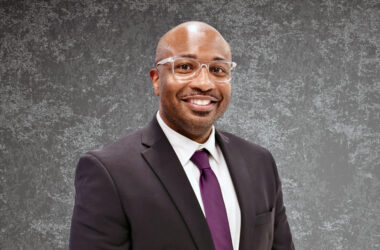
Board President David Linnear argued the discussion has gone on long enough. He hopes the board will make a decision at the April meeting. If the program is approved, staff will work to have it in place for the 2026-27 school year.
Members posed questions about how best to serve the district’s youngest population with limited resources.
“Where’s our opportunity for greater impact? This is creating a firm foundation,” said member Michael Rouse II, who acknowledged it’s only doable with finances to pay for it. “Now we have to sit down and prioritize what’s most important for our students.”
Board member Christina Vlietstra said she didn’t want to think about just the first year. Starting a program like this requires a commitment for the long term.
“If we don’t have sustainability, we don’t have a program. We’d have to go back to the drawing board,” said member Theartis Childress III. “We’re exploring the viability but we have to weigh the financial consequences.”
Board President David Linnear agreed, but told his fellow board members it’s time to make a decision. He believes “pre-K is the way to go now” but acknowledged without a clear funding source the board may be asked to make cuts in other areas.
The district’s current offering is the Preschool For All Program, which provides two and a half hours of daily instruction to 110 children between the ages of 3 and 5, specifically targeting those who may benefit from academic support. The district also offers early childhood preschool for 20 special education students ages 3 to 5 who require specialized instruction and related services.
Screenings or assessments determine eligibility for these programs, and space is limited, meaning that the district may have to turn away some students.
Preschool classes meet at Flossmoor Hills School. Jackie Janicke, director of special education, told the board the district’s costs now are $893,579, but a federal grant reduces that to $453,379.
The estimated costs show adding a full-day class would boost district costs to $1.29 million. A portion of that could be offset by federal grants, but there is no guarantee that the new classroom would also receive federal support, said Fran LaBella, assistant superintendent.
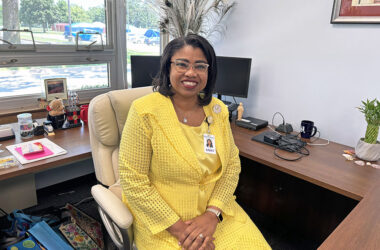
Expenses estimated at $55,000 would be one-time outlays for classroom furniture and materials, LaBella said, but the largest expenses will be salaries for a certified early childhood teacher, a lead teacher and two paraprofessionals at $167,498 and $175,000 for transportation.
Shared services with H-F
Board members gave their approval to start discussions with Homewood-Flossmoor High School District 233 on how the elementary and high school districts might work together “to promote strong program alignment and may create opportunities for future financial efficiencies,” Superintendent Dana Smith said in a memo to the board.
“These discussions are intended to gather information and consider opportunities for collaboration that support a strong and aligned educational pathway for District 161 students as they transition to high school,” he wrote.
Board member Christina Vlietstra raised a concern noting that not all District 161 students transition to H-F. The district serves students in Flossmoor, Homewood, Chicago Heights, Hazel Crest and Olympia Fields. She didn’t want this effort to hamper school alignment for students attending other high schools.
“The two boards are willing to just talk and share thoughts,” said Board President David Linnear. “It’s a unique opportunity.”
Member Theartis Childress III said, “The idea of creating a pre-K to grade 12 college preparatory and career pathway is intelligent on our part … Thinking about it, without all the political stuff that’s involved, this will help the kids.”


