


Homewood-Flossmoor High School is changing it scheduling — making periods longer with classes meeting fewer days each week.

It’s confusing to parents and students, but administrators believe once the schedule is in place for the 2026-27 academic year students will find they have more time for the redesigned curriculum that will include completing “pathways” for college and career readiness.
However, two students in the International Baccalaureate program addressed the school board at the Feb. 17 meeting saying the schedule will not work for all students.
The Illinois State Board of Education has asked high schools to give students information on career opportunities, whether a student is looking for work after graduation or will attend college. Pathways will offer opportunities for college-level credit, hands-on work experience and real-world application of classroom learning, according to District 233 information.
There are seven career clusters: agriculture, food and natural resources; arts and communication; finance and business services; health sciences and technology; human and public service; information technology; and manufacturing, engineering, technology and trades. These seven career clusters have 19 pathways.
Juniors and seniors will be asked to select a pathway to learn more or enhance their knowledge about careers.
For example, the career cluster in arts and communication has a pathway to journalism and radio and broadcasting production. The human and public services career cluster includes apparel and textile: fashion, fine arts, theater, criminal justice, culinary arts, early childhood education, government and public administration and work and family studies.
The plan calls for students to complete 60 hours of work in their chosen pathway, whether that be at school, working with a collaborating partner or meeting virtually with a partner.
The current class schedule has students meeting for seven periods, five days a week. Classes generally are 55 minutes, except on Wednesday which is a late-start day, when students attend periods 4 through 7, each for 74 minutes.
The schedule starting in August 2026 is akin to a college schedule. For example, White Day block classes will meet Mondays and Wednesdays, and Red Day classes meet Tuesdays and Thursdays. Classes meet for 88 minutes.
Lunch will be a 40-minute period followed by a 40-minute enrichment period.
Friday, designated Viking Day, will be the traditional seven-period day but periods will be 38-minutes. Friday will be the late start day.
The schedule change also allows students to spend more time in a pathway. The longer period would allow a student to go off-campus to a partner site for approximately an hour of hands-on training.
H-F juniors Chimdalu Okafor and Sophia Chan told board members the planned 88-minute classes are too long. They don’t believe students will be alert past 60 minutes. They don’t believe classes every other day is helpful. They say meeting every day helps to reinforce the material, especially in math, foreign language and band/orchestra.
Both students felt moving the late start day to Friday wasn’t helping students who need relief in the middle of the week, especially those with heavy schedules. Chan, who plays on several sports teams, said often she doesn’t get home until 8:30 p.m., and that late start helps her regroup and grab an extra hour or two of sleep.
The students don’t appreciate having a lunch hour at 10:10 a.m. “when I feel like I just got to school. I’m not going to want lunch,” Okafor said.
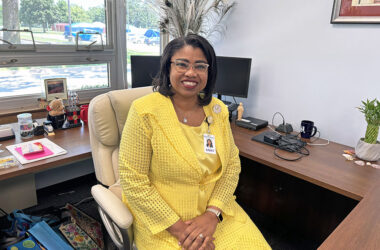
To help parents understand the changes, administrators have held eight informational sessions, Superintendent Jennifer Norrell said.
Norrell said administrators had already talked about the new schedule with the Principal’s Advisory Group and will talk to class officers for each grade level and “then follow up and have some conversations” with the general student body.
The superintendent admitted there’s not been a lot of explanation at great length about the changes to the schedule, but Carla Erdey, director of communications and community engagement, said Norrell will continue to have conversations with students “focused on explaining the schedule in detail, providing the benefits and rationale for the changes and seeking general feedback.”
Students are registering now for 2026-27 school year classes using the new schedule, but Erdey said “there is always room to hear thoughts and brainstorm solutions to respond to those concerns through implementation.”


