

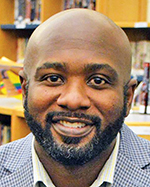

Elliott Chan explains the team’s LEGO model of the Horton Site, based on original maps and excavation notes from the 1960s dig. (Nuha Abdessalam/H-F Chronicle)
Education, Local News

Young roboticists use Legos to help revive Flossmoor archaeology dig

Students from HF Robotics spent this season uncovering a piece of Flossmoor history that many residents never knew existed. 

At the Nov. 20 South Suburban Archaeological Society meeting, the Cricketeers stood before a full room at the Irwin Center to share what they learned about the Horton Site, a 1960s archaeological dig now hidden beneath a neighborhood along Butterfield Creek.

“This has been an enlightening, rewarding and fulfilling season for us,” team member Elliott Chan told the crowd as the Cricketeers opened their presentation.

Elliott Chan explains the team’s LEGO model of the Horton Site, based on original maps and excavation notes from the 1960s dig. (Nuha Abdessalam/H-F Chronicle)

Flossmoor Mayor Michelle Nelson, who founded the robotics program in her garage 13 years ago, introduced the team with the pride of a coach who has watched generations of students grow into engineers. She thanked the local historians, archaeologists and museum experts who guided the group’s research.

“We do it because we love STEM, we love kids and we want to see their appreciation of STEM grow,” Nelson said before calling up this year’s roster: Elliott Chan, Charlie Rude, Evan Smith, Evan Moore, Samiyah Garrett and Finn Davies. The seventh member of the team, Laz Fabian, was not able to attend.

A dig hidden in plain sight

The Horton Site is easy to miss today. What was once a 1960s excavation run by the Field Museum and Northwestern University is now a stretch of Brookwood Road in Flossmoor, with a residential yard covering what lies beneath. 

The Cricketeers said they had never heard of the site until they began exploring this year’s FIRST LEGO League theme of anthropology.

  • Members of the HF Robotics Cricketeers gather near the back of the room as they get ready to present their research on the Horton Site. (Nuha Abdessalam/H-F Chronicle)
    Members of the HF Robotics Cricketeers gather near the back of the room as they get ready to present their research on the Horton Site. (Nuha Abdessalam/H-F Chronicle)

“Few people have ever heard of it, as it was covered a few years later by housing development,” Rude said. “We wanted to help with an example in our backyard.”

Their research uncovered a site where more than 50 high school students once sifted through soil and mapped 23,000 square feet of ground along Butterfield Creek. 

Excavators documented fragments of pottery, arrow points, cooking stones and bone remains from buffalo, deer, birds and fish. These clues pointed to a fifteenth century Native American presence. At the time, students camped out for two summers learning excavation techniques and recording what they found.

The Cricketeers visited the area themselves, walking the streets and creekside paths where the dig once stood.

Protecting what you cannot see

To understand how sites like this can be protected, Evan Smith explained that the team studied UNESCO’s preservation framework of credibility, conservation, capacity building, communication and communities. They focused on communication and community engagement.

Samiyah Garrett described their partnerships with Northwestern University, the Field Museum, the Illinois State Museum, the Society for American Archaeology, Irons Oaks Environmental Center and the South Suburban Archaeological Society. Experts helped confirm details and offered context for the site’s significance.

To make the dig easier for others to picture, the team built a LEGO model based on original maps and excavation notes. Small studs represented postholes and larger circles marked hearths. They then showed the contrast with a model of the modern home now covering the site.

“This local example is a metaphor for many archaeological sites being covered by modern land development all over the world,” Chan said.

Posters, conversations and a little movie inspiration

The team also created a traveling exhibit of posters, maps and their LEGO model. They presented at the Homewood Science Center’s STEM Saturday, drawing parents and children as they rebuilt parts of the Horton Site in real time. They held workshops with archaeology students and researchers and screened Raiders of the Lost Ark for fun.

Finn Davies explained how the work reflected FIRST’s core values of discovery, innovation, impact, inclusion, teamwork and fun.

The robot behind the history

After covering the archaeology, the Cricketeers shifted to the robot they built for their December competition. They split into two smaller groups, created two identical robots to give everyone practice time, and relied on reusable coding blocks to keep their program organized.

“We did not just run it one time and say we are done,” Evan Moore said. “Our goal was for the robot to perform accurately at least nine out of ten times.”

If a run failed, they made one change at a time and tested again. By the end, Davies said, they were not just better builders. They were closer friends.

The teenager who found the site

Following the students’ presentation, the audience heard from the person who first identified the Horton Site more than sixty years ago: Vernon James Grubisich, then a freshman at Bloom High School. He described biking along creeks with USGS maps, searching for signs of earlier habitation.

“These kids are the future,” he said.

Grubisich recounted salvage excavations in 1966 and 1967, the discovery of postholes and hearths, and the evidence of a late Mississippian winter hunting camp. Buffalo bones, stone tools and pottery sherds helped outline what life along Butterfield Creek once looked like. He also credited archaeologist Elaine Bluhm, whose surveys and mentorship guided early work throughout the region.

Attendees asked whether any artifacts are still accessible and whether any excavations are happening today. Society leaders said they are still working to track down where the materials ended up and are not aware of any active digs in the immediate area.

For one night, archaeology veterans, SASS members and local residents gathered to watch students bring new attention to a site most had never heard of.

“It seems they are being prepared for what the world has become and what it will continue to be,” said Thomas Czech, whose grandson Evan Smith is on the team.

The project did not just teach robotics or archaeology. It helped put a local story back on people’s radar.

Advertisement
Popular stories < 7 days

Newsletter

Meet the Candidates: U.S. Senate

Conversations with the Chronicle