

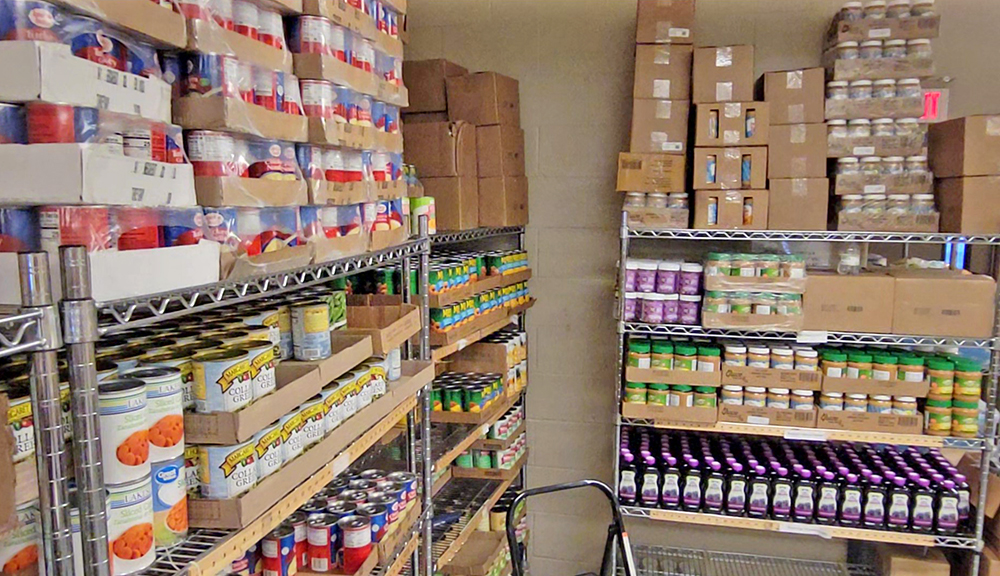


Local food pantries are bracing for a tsunami of people suddenly needing their services.
The federal government shutdown that began Oct. 1 appears likely to disrupt the Supplemental Nutrition Assistance Program (SNAP), leaving nearly 42 million Americans and 1.9 million Illinoians without food assistance.
Locally, Anew: Building Beyond Violence and Abuse, based in Homewood, sent out an appeal to supporters to help the organization help its clients during the crisis. The Catholic Charities mobile food bank based in Park Forest saw an increase in need before the government shutdown. Volunteers expect numbers to rise.
The Greater Chicago Food Depository, which helps supply a regional network of food pantries, characterizes the disruption in SNAP benefits as “a food crisis across Illinois and the nation.”
According to the depository’s website, the SNAP program serves 650,000 children, more than 280,000 people with disabilities, nearly 45,000 veterans and thousands of older people. An estimated one in five Chicago area households experiences food insecurity. And as the government shutdown approaches one month, there are 60,000 federal workers in Cook County who haven’t been paid.
In a statement posted on Oct. 28, depository officials decried the impending disruption in the program.
“Even during a shutdown, the federal government has a legal requirement and moral obligation to fund SNAP,” the statement reads. “There is no greater priority than making sure 41 million Americans, including 1.9 million people in Illinois, don’t go hungry. A disruption to SNAP will create a crisis unlike anything we’ve seen in our 46-year history.”
The United States Department of Agriculture, which manages SNAP, announced on Oct. 24 that Nov. 1 benefits would not be paid, in spite of the existence of contingency funds intended by Congress to be used in case normal funding was not available.
On Thursday, Oct. 30, Gov. J.B. Pritzker announced he would sign an executive order making $20 million available to help compensate for the lack of SNAP funding. According to the depository, Illinois distributed $4.7 billion in SNAP benefits during the 2025 fiscal year.
llinois is one of 25 states suing the USDA over the planned shutdown of the program.
The Greater Chicago Food Depository predicted that a SNAP disruption would generate overwhelming demand on local food pantries and would put grocery businesses at risk that depend on sales to SNAP participants. SNAP provides nine meals for every meal provided by food pantries, so the program’s failure would require pantries to increase capacity by nine times immediately in order to meet the need.
“The effects will be disastrous for families, local economies and the health of communities. People will go hungry, including children, older adults and veterans,” the statement said.
Depository officials said they are working with affiliates and partners throughout Cook County to explore opportunities to increase food distribution, focusing on areas with the most program participants.
“We will do everything in our power to make sure food is available for anyone who visits a local pantry,” they said.
“SNAP benefits are a vital source of consistent food assistance, especially for families rebuilding stability after abuse,” ANEW Chief Executive Officer Jennifer Gabrenya said in an email message. “We are preparing to help our clients bridge this critical gap — but we need your support.”
She suggested supporters donate grocery store gift cards because they provide abuse survivors with autonomy, dignity, and flexibility to meet their family’s needs.
Anyone wishing to donate gift cards or make a monetary donation can call 708-794-2140, ext. 311.
Bloom Township Food Pantry Director Susana Long said Bloom Township Food Pantry already began to feel the impact of the government shutdown in late October as clients prepared not to receive their SNAP benefits in November.
Long said Bloom Township Food Pantry typically serves between 120 and 150 clients each day it’s open, but it’s now closer to between 200 and 220 clients per day.
“Honestly, I could expect us getting to the 300 mark each day,” Long said, predicting a greater influx of clients in November.
Long said if a community member is concerned about the influx of clients, they can donate to the Greater Chicago Food Depository or volunteer at Bloom Township Food Pantry by bagging produce. She said the food is acquired from the Greater Chicago Food Depository and from staff members who buy it at local stores.
Rich Township Pantry, which is open Tuesday and Thursday, typically serves about 200 clients per week, Coordinator Rietta Woods said. They had about 150 more clients than that on Oct. 30 as clients prepared for their loss of benefits, Woods said.
That same day, four community members donated food to Rich Township Food Pantry, Woods said, adding that increased community support will make it easier for them to prepare for an influx of clients in November.
“People are just going to the grocery stores, buying food, and bringing it here. People brought vegetables that they still had in their yards,” Woods said, adding that one of these community members was someone she’d never seen before. “Anyone can come by and donate food.”
Woods said if SNAP benefits stay unavailable, she expects Rich Township Pantry to continue having approximately 150 additional clients per day.
“It’s sad what’s going on in the world, but I feel confident that this community is going to step up, and we’re going to be able to help people to eat,” Woods said.
Mary Ellen Brabec of St. John Neumann Parish in Homewood has been volunteering with food drives for Catholic Charities for years.
St. Irenaeus Parish in Park Forest was a Catholic Charities pantry site. Parish buildings closed when it merged with St. Veronica Parish in Flossmoor. The food pantry remained in the former convent for several years, but now it is shut down.
Brabec said the local volunteers convinced Catholic Charities to keep a pantry in the South Suburbs because the area is a food desert. Now Catholic Charities operates a mobile food pantry between 9 a.m. and 2:30 p.m. on Thursdays from a location at Victory Christian International Ministries at 10 Hemlock St. in Park Forest.
The mobile unit has donations from various food drives and the Greater Chicago Food Depository. Often they can provide milk, eggs, cheese, produce and some meats, as well as canned goods.
Brabec said at the distribution on Oct. 30, she didn’t expect many people because it was the fifth Thursday of the month, but “we served 102 people today. We registered over 40 new clients and saw many young people as new clients.” With SNAP benefits being cut “we know we’re going to have more people coming to utilize it.”
Volunteers can only serve residents of Cook County. Participants sign up for a card (with proof of address) that enables them to monthly visits to food pantries receiving supplies from the Greater Chicago Food Depository.
Donations of canned goods, cereals, pastas, etc. will be accepted at the next “pop the trunk” food drive for Catholic Charities on Saturday, Dec. 6, at the parking lot of St. John Neumann Parish, 17951 Dixie Highway, Homewood.
Respond Now, a charity organization based in Chicago Heights, said it’s ability to expand food support is being hampered by renovations to its main building, according to Stephanie Hobson.
The main pantry might not fully open until December, she said. The organization operates a small food pantry in Sauk Village, but it’s really designed to serve only two communities.
She said the organization would do what it can to provide food, and for people they cannot help, staff will help people find other sources of food, primarily in the GCFD network.
Anyone in need of food assistance can find a program near them by visiting the Find Food page of the depository’s website. SNAP participants can also check Illinois Department of Human Services webpage for updates.
In a statement issued Thursday, Oct. 30, Cook County Board President Toni Preckwinkle said the county will stand with residents affected by the SNAP crisis.
“Food insecurity is not an abstract policy issue. It is a painful reality that too many of our neighbors live with every day,” she said.
She encouraged those who are able to volunteer at the Greater Chicago Food Depository or at a food pantry in the GCFD network. Visit volunteers.chicagosfoodbank.org to learn more.


