


Note: This story is the third part of a three-part series.
Sylvia knew her goal was to graduate Homewood-Flossmoor High School and become a cosmetologist.
Her below average reading scores got her into the specialized reading program, but Sylvia didn’t care. What did it matter, she argued, I’m going to use my creative skills and my hands to make others beautiful.
After numerous attempts to engage Sylvia, the reading specialist made one last attempt. She decided to order a book used in preparation for the state cosmetologist licensing exam. When she presented it to Sylvia, the student’s ideas about reading took a dramatic turn. One could say it was a rude awakening for Sylvia, but it also meant she grasped the importance of reading.
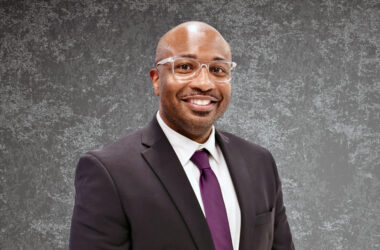
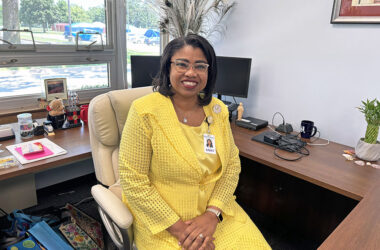
Jen Rudan, director of Student Supports at H-F, said reading is essential in every field and H-F works to prepare students for whatever their futures hold. The intention behind the reading program is to help the estimated 175-200 students needing services to reach an eighth grade reading level and be able to improve their comprehension of school texts.
Students in the reading program are divided into three tiers: Tier 1 has classroom teacher intervention; Tier 2 has a reading specialist in the classroom giving students assistance; Tier 3 has a reading specialist in the classroom with additional assistance through special class time during the week.
H-F statistics for the coming school year show 72 students will continue in Tier 2 reading intervention classes; 34 students who received services this year will no long require services next year; 37 students will continue with Tier 3 services; three others are no longer at H-F.
The interventions are helping students grasp text by giving instruction in learning word roots, prefixes and suffixes to help them learn “attack skills” for word meanings.
“There isn’t a scripted book or guide for a reading specialist, it’s all based on the needs of the student,” Lauren Freeman, Reading Department lead, said.
“We’ve seen this transfer of reading skills now across the board where students aren’t necessarily struggling with biology vocab any more, even though its co-taught in biology they’re in a space where they’re transferring these skills,” according to Jennifer Rudan, director of Student Supports.
Rudan said the shift away from the old method of a designated reading class to the new embedded reading program opens up a class period for students in Tier 2 giving them the chance to enroll in another elective class.
“Just because you’re in reading intervention, this year doesn’t mean you’re here. Once you hit that benchmark we’ve established we move you out very quickly,” Freeman said.
“We’re really focusing on the root cause of why kids are struggling,” Rudan said. “We’ve really come a long way to do that root cause analysis so that we don’t waste time putting them in the wrong intervention.” H-F is working to get students “what they need to get them to success.”
Having H-F reading specialists in core classes is about four years old.
“We built it ourselves,” Freeman said. “One of the greatest challenges was trying to figure out how it could work on a high school schedule” with regular- and extended-class periods.
The intervention services are also integrated with special education and multilingual learner support so that all students with reading challenges are receiving evidence-based instruction from reading specialists.
Freeman leads the reading program, but she stresses the work is a team effort. Kim Perisin and Chris Reid are reading specialists who are co-teaching in social science classes for Tier 2 students. Beverly Woods-Lenore, Courtney Hendricks, Anna Tenny and Adriana Diachenko are the Tier 3 reading intervention team. Alicia Rodriguez, the school librarian, and Jolyce Abernathy, library technical assistant, round out the team.
Freeman also credits the District 233 school board for supporting the initiative both through its board policy change and through financial resources that reading specialists use for continuing education.
