

Note: This is part two of a two-part series. Part one is available here.
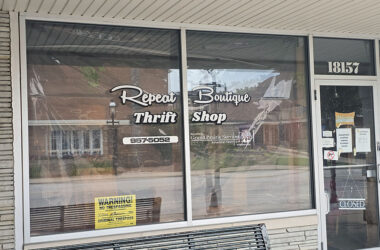
Rabid Brewery owners Raiye Rosado and Tobias Cichon had developed plans to expand their business by purchasing a village-owned shopping strip on West 183rd Street, but their hopes were dashed Tuesday, May 27, when the Homewood Board of Trustees voted unanimously to award the bid for the property to a real estate partnership instead.
Since opening their craft brewery in 2017, Rabid Brewery built a loyal following, as evidenced by the crowds of patrons who have filled the village hall board room at two recent meetings. Cichon said at the meeting that the couple had decided two years ago that they had outgrown the brewery’s home tucked away in a corner of a business complex on Bretz Drive a block east of the Halsted Street commercial corridor.
“We were ready to move out of Homewood because … it really wasn’t sustainable. We had a couple of other options, and Homewood came to us and said, ‘Hey, we’ve got this property. Why don’t you stay here, develop this property?'” Cichon said. “We committed to Homewood. We stayed here for two years and developed this entire plan. We were told that we were preferred developers. So maybe you can see why this doesn’t feel quite right.”
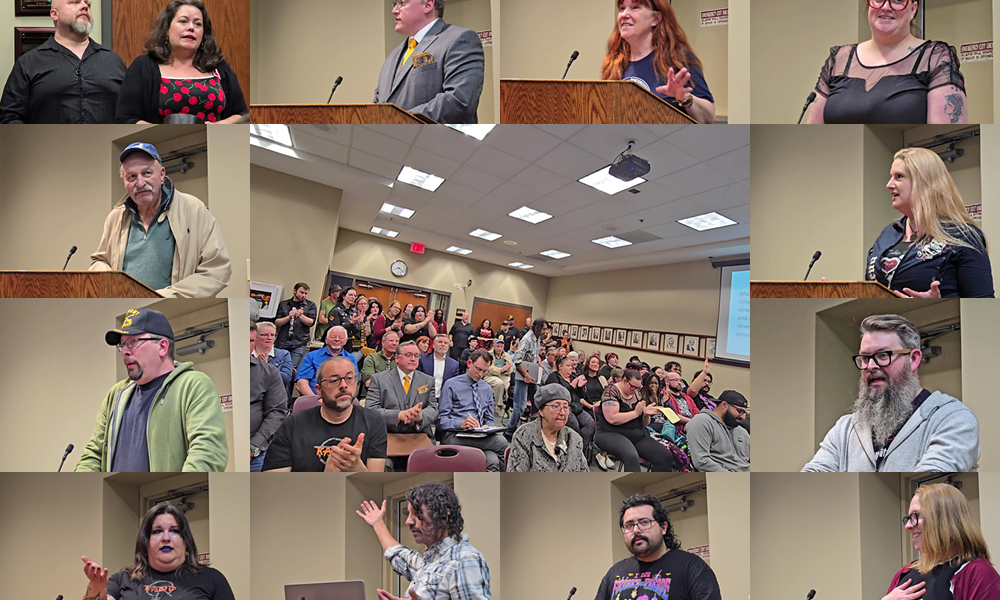
As at previous meetings, Cichon and Rosado let their patrons do most of the talking, and the patrons had a lot to say about what the brewery means to them.

One person conceded the relative weakness of Rabid Ground’s plan in terms of immediate return on investment and relative risk compared to the other bids, but he suggested the board look beyond the numbers in the bid assessment and consider the broader value of Rabid’s role as a regional draw.
“A vibrant food-forward brewery with a flexible venue backed by an existing local brand … draws visitors,” he said. “It anchors the kind of visit-and-stay economy that other businesses need to thrive. That economic halo is real. Anchor destinations like this don’t just succeed. They lift the performance of the surrounding commercial landscape. … Every dollar spent supporting a resident-owned anchor strengthens your long-term economic resilience more than a strip of leased units ever will.”
The economic impact of Rabid’s regional drawing power was echoed by Homewood native Jennifer Peterson, who recalled some of the establishments she remembers from the past.
“The one thing they all had in common was that they built community. They brought people together. … They brought families together. And that’s what Rabid Brewing does,” she said.
She added that when she goes to the brewery, she often meets people from around the area and around the country who have found their way to Homewood because of Rabid Brewery.
“These are people that are coming from all over, from Chicago, from different states,” she said. “I met people that were traveling the country, checking out breweries. And they came here just to see Rabid.”
Most of the 11 people who spoke on Rabid’s behalf emphasized the brewery’s role as a third place, defined as a place distinct from work and home that gives people a chance to build community and a sense of place.
One man from Chicago Heights talked about making friends while his children played Dungeons and Dragons there. A women said she took her 89-year-old teetotalling mother to Rabid, and her mother was delighted to see young couples sharing pizza while their children ran and played.
Galen McQuillen of Homewood said, “I have never felt more cared for, more safe in a space and more ready to do better and be better in my life than I have in the care of the people who work at Rapid.”
Jessica Parks, who lives near Naperville, said her area has many nice bars to chose from, but she travels to Homewood for Rabid Brewing.
“I found I found a home there,” she said. “It’s like ‘Cheers.’ You walk in, everybody knows your name.”
Steve Caton acknowledged the Caton/Granite partnership does not include specific uses other than the current tenants and that their plan has a different focus from the competing bids.
“Our business is buildings. And the problem here is the building. The building is in dire straits,” he said, listing a number of serious deficiencies in the structure. “The tenants then will come. We have no issue with tenants. We have relationships with tenants.”
He said he was impressed with Rabid’s following. He indicated the partners would be open to discussing the possibility of Rabid Brewing becoming a tenant.
Before the vote on the bid award, Trustee Lauren Roman said she wanted to support Rabid’s expansion and hoped the business would stay in Homewood.
“This is a hard decision,” she said. “If I was deciding tonight only on emotion, my decision would be different. But we have a responsibility as trustees to not make emotional decisions. We have a responsibility to balance those emotions with the fiscally responsible, sustainable, successful businesses.”
Trustee Jay Heiferman also said he supported the Caton/Granite proposal because the developers appeared better qualified to rescue the aging building.
Roman asked Cichon and Rosado if they would consider Caton’s invitation to consider developing Rabid Public House as a tenant. Rosado indicated they were not interested in that option. Her answer came down to relationship.
“If you choose not accept our project, you’re going to be telling us that we don’t belong here,” Rosado said.
Related story:


