

Local News

Health & Wellness 2025 | When minutes count: Franciscan Hospital’s Acute Stroke Ready designation is a lifesaver for stroke victims

Jennifer Biank is a woman on a mission when it comes to strokes.

“A stroke is not the same as a heart attack. Your brain is experiencing trauma,” said Biank, who is coordinator of Clinical Outcomes and Stroke at Franciscan Hospital, Olympia Fields. “I need you to have the same urgency as if this person was having a heart attack. Globally, it’s a problem that people don’t react fast enough with strokes.”
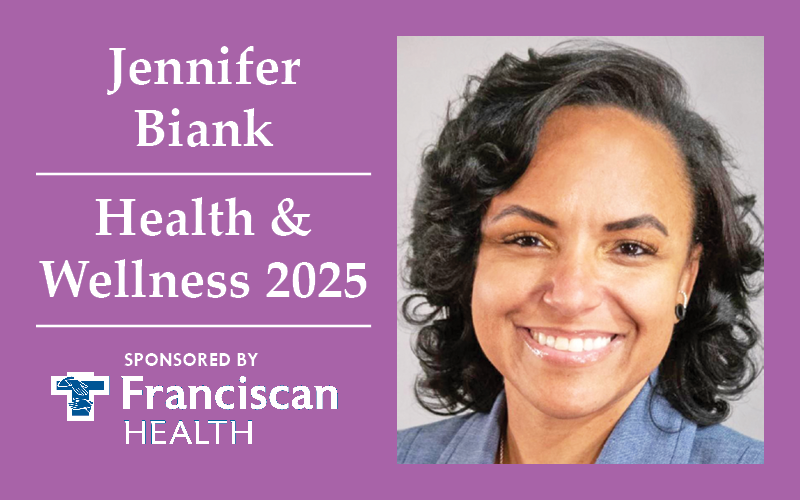
But help is close by for residents in the South Suburbs. With Franciscan now designated as an Acute Stroke Ready Hospital by the Illinois Department of Public Health, Biank is excited about what that means for patients. The moment a stroke victim arrives at the hospital, they are quickly assessed and given lifesaving treatment by professionals specifically trained to treat strokes. Every minute counts when someone is having a stroke.

“They call it the golden hour. The golden hour is 60 minutes or less from when your symptoms start. Don’t mess around. Call 911,” said Biank. “We have a clot busting medication that we can give to stop that stroke, stop the damage.”

Strokes are the fifth leading cause of death in the U.S. and a leading cause of disability, according to the American Stroke Association’s website.

Franciscan secured the Acute Stroke Ready Hospital designation by applying and meeting certain criteria. A key criterion is to have a CT scan ordered, performed and returned to the emergency room physician to review within 45 minutes of the patient’s arriving at the hospital.

Acute Stroke Ready hospitals must have access to a neurologist to assess the stroke patient within 24 hours, Biank said. Franciscan Olympia Fields has partnered with Rush University Medical Center for this. Franciscan has a telemedicine robot that a doctor can use to zoom in and see a patient’s pupils and listen to the heart virtually.

The hospital also must have a transfer agreement with another hospital offering a higher level of care for stroke victims. The designation is good for three years and can be renewed as long as the hospital continues meeting the criteria and turns in its logs and data every year. Biank says that the key piece is a standardized approach to stroke.

“I just want people to know the signs and symptoms of a stroke and call 911. Say what you see and remember the time,” said Biank, who has 12 years of neuroscience and stroke experience.  “I tell people to look at the time the symptoms started.”

Next, it’s important to share that information with paramedics. Quick action can prevent paralysis, arm weakness and speech problems, said Biank, who has a master’s degree in nursing with a clinical nurse specialist certification.

Knowing the warning signs of a stroke is crucial. F.A.S.T is an information tool to help people recognize those signs.

F stands for face drooping or twisting. A is for arm weakness. S stands for speech difficulty. And T stands for time to call 911. If someone exhibits those symptoms, call 911. Other symptoms of a stroke include numbness, especially on one side of the body; trouble speaking or understanding; dizziness or a loss of balance and difficulty seeing. Another symptom is having the worst headache of your life, Biank said. That can be a sign of a brain bleed. If that happens, don’t take an aspirin and lie down. Seek help immediately, she said.

Biank says that there are two kinds of strokes, ischemic and hemorrhagic strokes.

A hemorrhagic stroke means there is a bleed to the brain. Uncontrolled hypertension is the number one cause of a hemorrhagic stroke, Biank said.

An ischemic stroke means there is a lack of blood flow to the brain.

“Eighty percent of ischemic strokes are preventable,” Biank said. “It starts with lifestyle changes and going to the doctor.”

There are also transient ischemic attacks, which happen when there is a temporary blockage of blood flow to the brain. According to the American Stroke Association, “the clot usually dissolves on its own or gets dislodged, with the symptoms usually lasting less than five minutes.”

Technically, a patient has four hours to get stroke medicine, but the sooner he or she receives the medicine, the better the outcome and chance of recovery, Biank said. She also reminds people not to balk at the cost of an ambulance. Biank says that does not compare to the cost of losing your ability to work, walk or speak.

She also tells people to give the name and phone number of the person who called the EMTs. Biank stresses how important it is to have a contact person, especially if the patient is unable to talk. The hospital staff needs to be able to speak to someone who saw and heard what happened.

“If you don’t, now we’re playing detective,” Biank said.

Biank is passionate about stroke education and says that outreach is one of her favorite things to do. With Biank, outreach isn’t about preaching or shaming people. It’s about teaching them and showing them alternatives.

“You have to meet people where they are,” said Biank. “I’m very passionate about doing right by our patients.”

She cites food as an example of meeting people where they are.

“Food is cultural. You can’t tell people not to do what they’re culturally prone to do,” she said. But you can encourage them to make healthy changes to their diets and the foods they love.
Biank tells patients to take an active role in their health decisions.

“This is what I tell patients. You drive what happens. It’s your mindset,” she said.

Learn more at the American Stroke Association’s website at www.stroke.org.

Popular stories < 7 days

Newsletter

Meet the Candidates: U.S. Senate

Conversations with the Chronicle