

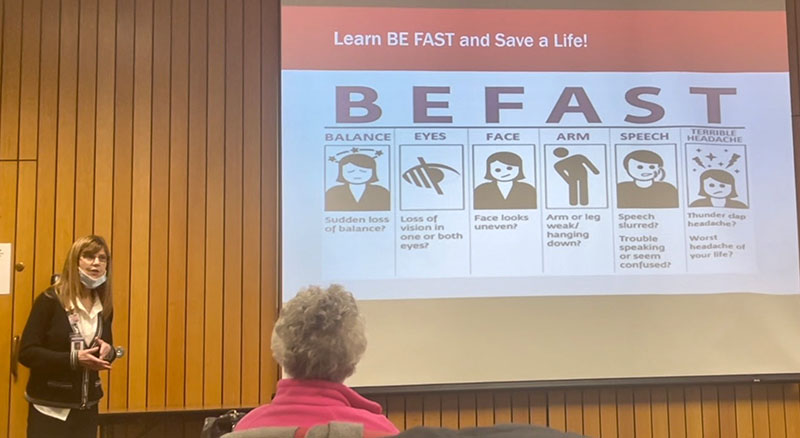
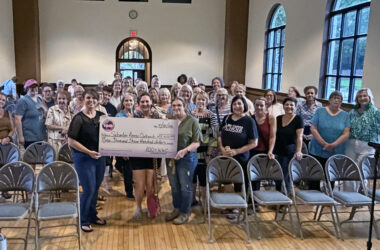

Joyce Fitzpatrick, left, teaches the stroke detection guidance acronym "BE FAST" to attendees. (Summer Kiswani/ H-F Chronicle)
Local News

Life’s Essentials for Stroke Prevention presentation held at Homewood library  

Certified nurses Mary Burke, Sirena Shepard and Joyce Fitzpatrick shared their expertise on strokes to a group of seniors at the Homewood library on Feb. 17. 

Their presentation helped educate attendees on the signs and symptoms of strokes and how to prevent them.

Burke, Shepard and Fitzpatrick, who all work at Advocate South Suburban Hospital, started with teaching the acronym “BE FAST.” This stands for balance, eyes, face, arm, speech, and terrible headache. These are the six main signs of identifying a stroke, they said. 

Joyce Fitzpatrick, left, teaches the stroke detection guidance acronym "BE FAST" to attendees. (Summer Kiswani/ H-F Chronicle)
Joyce Fitzpatrick, left, teaches the stroke detection guidance acronym “BE FAST” to attendees. (Summer Kiswani/ H-F Chronicle)

According to them, people should watch out for loss of balance, loss of vision in one or both eyes, facial drooping, weakness in an arm or leg, slurred speech and severe headaches. 

Despite uncontrollable factors that increase one’s risk of stroke, such as age, race and family history, there are eight things that people can do to lower their risk of having a stroke, Fitzpatrick said. These include maintaining a healthy weight, balanced diet, physical activity, managing blood pressure, cholesterol, blood sugar, quitting smoking and getting seven to eight hours of sleep. 

“High blood pressure is the number one cause of both the leading stroke, where the blood vessel breaks in your brain and you have blood in your brain, or the blockage type of stroke,” said Fitzpatrick. 

That’s why it’s important to keep taking prescribed blood pressure medication, “even if you think you feel better,” Fitzpatrick said. 

According to Shepard, eating the right foods and doing enough activity are also important aspects for preventing a stroke. People should avoid saturated fats, reduce salt intake, and limit processed foods, she said. 

“Limit the amount of red meat, but add in poultry and fish–fish being the main source of protein,” said Shepard. 

Aiming for 150 minutes of exercise a week is another key, she said. 

“It can be broken down to 15 minute increments, and it can be anything. It can be vacuuming, walking around your house, gardening, doing yard work, things of that nature,” Shepard said. 

Another important health factor is to quit smoking, said Burke. She explained the science behind the reason why to attendees. 

“What happens when you smoke is your red blood cells get saturated in carbon monoxide, which your body really can’t use,” said Burke, adding, “that means that your tissues are not getting the type of oxygen that they need, which causes vascular changes and stresses out your body.”

Burke, Shepard and Fitzpatrick also went over a stroke risk evaluation form for attendees to take home, and shared the contact information for the American Stroke Association (ASA).  

To learn more about brain health and strokes, they recommend people contact ASA at www. stroke.org, or by calling 1-800-242-8721.

Advertisement
Popular stories < 7 days

Newsletter

Meet the Candidates: U.S. Senate

Conversations with the Chronicle