

Bradley-Scott to launch campaign
Flossmoor Trustee Joni Bradley-Scott announced earlier in July that she will be running for mayor of Flossmoor in the April 2025 election. She is holding a campaign launch event from 6 to 9 p.m. July 30 at Opulence Gallery, 3323 Vollmer Road in Flossmoor.
Solving property taxes: Would TIF for homeowners help?
Property owners who spoke during the Q&A part of the town hall meeting in Homewood on July 20 had various increases in their taxes to report, but one thing united them all, a profound sense of exasperation. And a demand for change.
The first speaker noted: “My taxes have gone up 104%. I appealed in late summer after the reassessment. I appealed again in the fall. I got a little bit of relief, but my taxes have doubled. I think these outrageous taxes are actually eroding property values.”
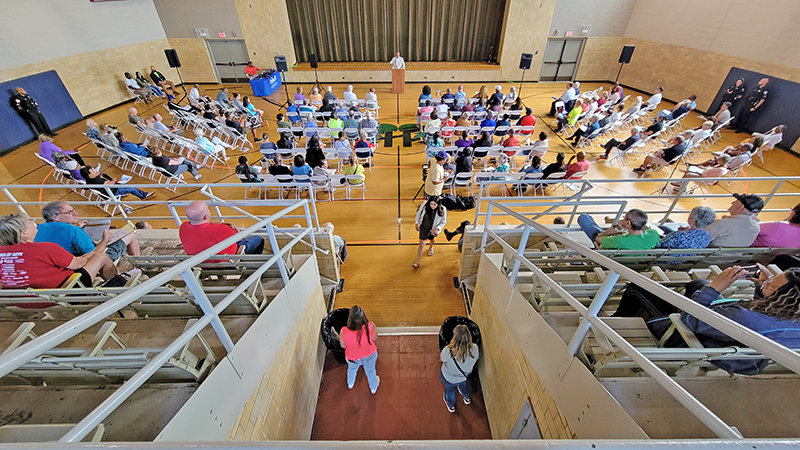
The irony is that rising market values are a factor in rising assessments. The speaker was not the only one to note that such sharp increases in property taxes might give buyers pause.
Another speaker described a similar situation. She reported her 106-year-old house was being taxed at $800 per month.
“I planned to stay in this house until I die. These taxes have forced me out,” she said. However, she has had her house on the market for seven months and has had potential buyers balk at the tax bill.
Guest speaker Fritz Kaegi, Cook County’s assessor, expressed sympathy for the property owners’ plights. During his presentation and in answering questions from people in the audience, he explained the tools taxpayers have to get relief, primarily exemptions and appeals.
He also explained the limits of those tools in creating a more fair system. Both exemptions and appeals have no impact on the total amount of tax revenue the county must collect, so any time one tax payer’s bill is reduced, the reduction is spread to other taxpayers.
“I feel a sense of indignation because it’s hard to build wealth when the taxes keep going up,” he said.
Kaegi mentioned several steps he would like the state and county governments to take that would help mitigate the tax burden on homeowners.
He underlined what state Rep. Will Davis,D-Homewood, said earlier in the meeting: the state needs to continue to increase funding for public education, which will relieve pressure on property taxes.
Kaegi advocated for legislation Davis pushed for but failed to pass. It would give his office better data to help make accurate assessments, especially of commercial property, which tends to get more breaks during the appeals process than homeowners do.
He said a “circuit breaker” should be enabled. That’s a type of exemption that is funded by the state so the reduction does not increase the burden on other taxpayers.
He mentioned another idea I’d never heard of, a proposal to change state law to allow tax increment financing districts to benefit homeowners. Currently, TIF districts use funding generated by property taxes in excess of a base level set when the district is established to make infrastructure improvements, help with qualified property acquisition and improvements.
TIFs are intended to spur development in locations that without financial support will languish, unused or underused, and will not contribute to local government support. TIFs use increases in property value to fund the redevelopment work that will increase a property’s contributions to local government.
However, some local residents oppose TIFs because they see them as a boon to commercial interests while individual taxpayers continue to bear increasing tax burdens.
Chicago’s Pilsen voters passed an advisory referendum last year in support of making TIF benefits available to homeowners whose property taxes increase by more than 40%.
TIF for homeowners is an intriguing idea. It’ll be interesting to see if the legislature takes it seriously.
I asked Kaegi how homeowners could help make reforms happen.
“The common element for all of these reforms being put into place is citizenship. People using their voices, using the same sense of indignation that I have to work with champions who want to bring about these kinds of reforms,” he said.
Save the date: Flossmoor history tour
The Foundation for the Preservation of Flossmoor History will hold a block party and self-guided historic homes tour from 2 to 4 p.m. on Sunday, Aug. 11. The event will be held in the FCC Community House, 847 Hutchison Road.
The tour will help celebrate the village’s centennial with a look at the exterior of the first nine homes built in Flossmoor Park.
The foundation will be accepting donations to help with the renovations of the Wagner Building, the foundation’s home.
Harris endorsements
Democrats representing the South Suburbs at the federal level were quick to endorse Vice President Kamala Harris for the Democratic Party’s nomination following President Joe Biden’s announcement Sunday, July 21, that he was withdrawing from the race. U.S. Rep. Robin Kelly, and Sens. Tammy Duckworth and Dick Durbin threw their support to Harris. The full Illinois delegation to the Democratic National Convention in August have unanimously committed to Harris.
Tornado lesson
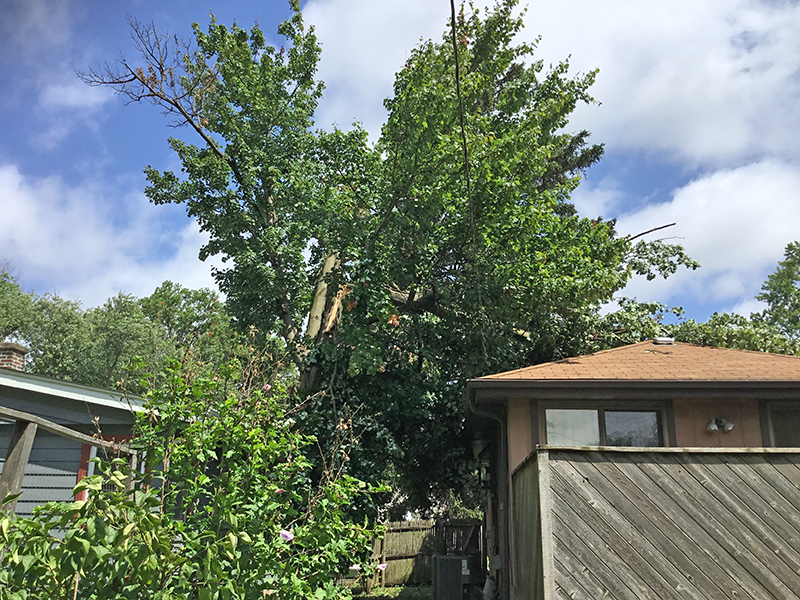
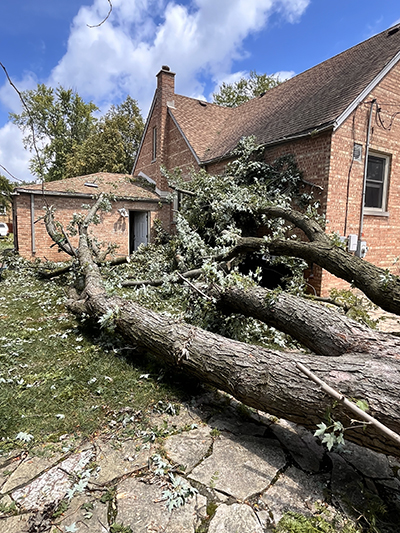
In the aftermath of a derecho storm system that spun out tornadoes like violent confetti on July 15, the National Weather Service offered a lesson in tornadic activity in storms and how it determines whether sites of damage were hit by a tornado. Here’s an excerpt:
A note about non-tornadic vs. tornadic winds: rotation in squall lines can be finicky with rapid strengthening and weakening on the order of seconds in close proximity to non-tornadic winds.
As a result, confirming tornadoes produced by lines of storms can be an arduous process.
With that said, it’s possible there were brief tornadoes in the areas of non-tornadic winds. Sometimes, a tornado starts to develop but fails, causing a slight uptick in damage and even a curl to the wind. It’s difficult to say when this process “officially” becomes tornadic.
While there were numerous tornadoes produced by the derecho on July 15, the line of storms was also producing widespread damaging winds. Winds don’t need to rotate to be damaging, and some areas with non-tornadic winds had worse damage than where tornadoes were confirmed.
While we try our very best to catalog the cause of damage, it doesn’t change the fact that trees have to be cleared and homes have to be repaired regardless of the exact meteorological cause. Our thoughts are with everyone who was impacted by the storms.
We’re still assessing damage in additional locations, including Monroe Center, Herrick Lake Forest Preserve, Kingston, Kniman, and Beaver City (among others). Finalizing everything will take weeks, and additional damage areas may be added in future updates.
You can always view the latest here. Just be sure to change the date selections in the upper right hand corner. We appreciate all the help from our partners and the public in sharing reports and photos of damage!