






The Irons Oaks Environmental Learning Center roared with excitement on June 9 as it hosted a cicada celebration that drew an enthusiastic crowd.
The event was accompanied by a chorus of cicada calls, with a decibel meter recording sounds nearing 100 dBA. To put into words just how loud that is, the National Institute of Deafness and Other Communication Disorders’ website says that long or repeated exposure to sounds at or above 85 dBA can cause hearing loss.
The celebration featured a variety of activities for attendees of all ages. Cheryl Vargo, the manager at Irons Oaks, explained that Brood XIII should be winding down (also known as fatiguing) soon.
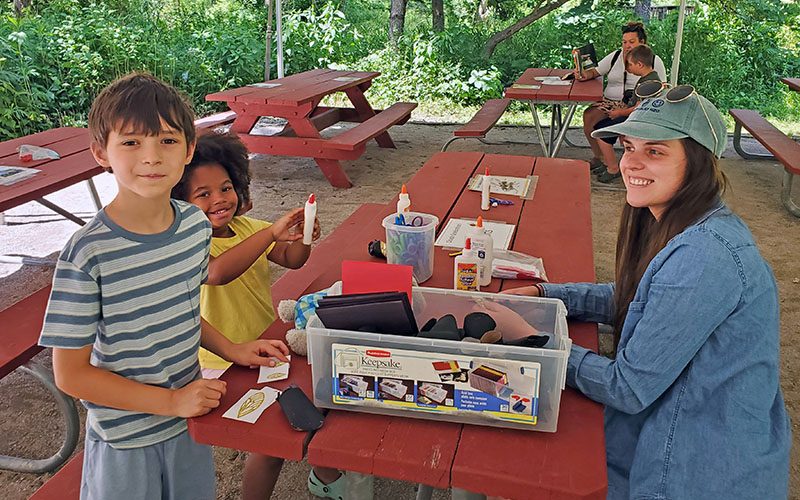
 Caitlin McCaffery (left), Lavon Robinson (back), Amara Robinson (middle) and Noa Robinson (front) take a close look at the cicadas collected by Iron Oaks staff. (Chris Weber/H-F Chronicle)


For now, it is a boon to wildlife.
“They eat so many cicadas they don’t even need to hunt their normal prey. When the cicadas that don’t get eaten eventually die, they add nutrients to the soil. They are great for the environment,” Vargo said.
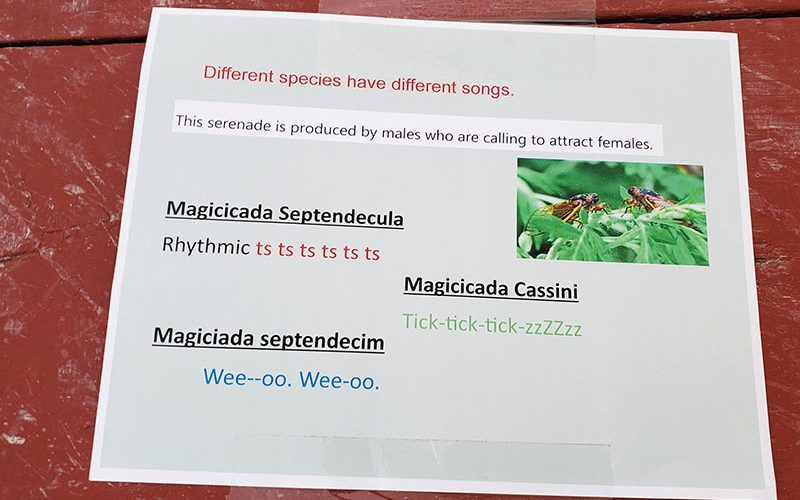
Brood XIII, the periodical cicadas that surface in northern Illinois, Indiana, Iowa, Wisconsin and possibly southwest Michigan every 17 years, includes three distinct species of cicadas. The trio of Magicicada cassini, M. septendecim, and M. septendecula are also known as the Northern Illinois Brood.
The males of each species have a unique call used to attract females. Visitors were encouraged to listen to the different cadences and try to mimic them with tools provided at the event.
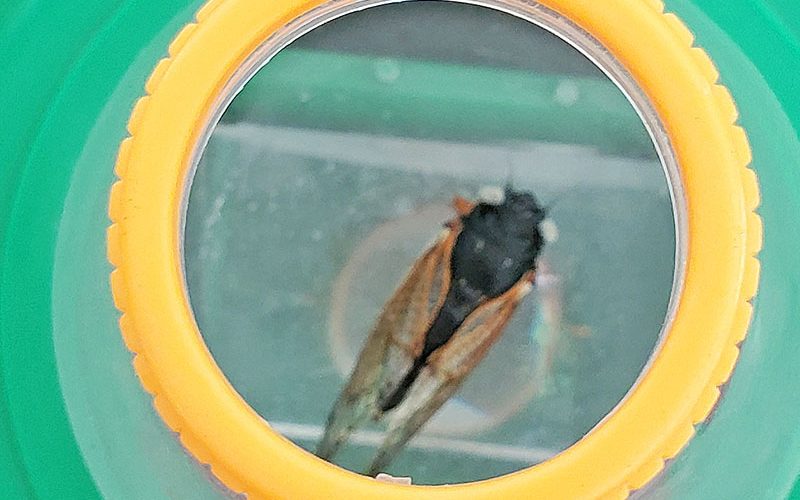
Children enjoyed craft projects, books about cicadas and examining the insects up close with special magnifying viewers. A highlight for many was seeing one of the rare blue-eyed cassini cicadas, a feature seen about once in every million. A few cicadas with this rare mutation have been spotted in the Homewood and Flossmoor area this spring.
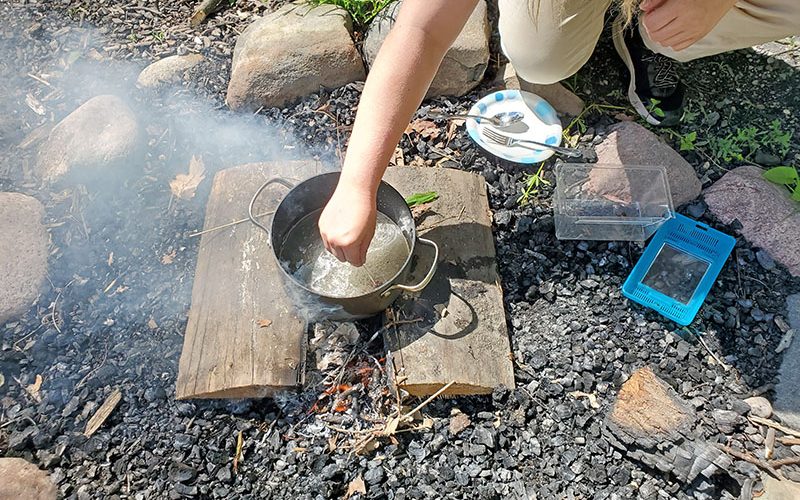
For the more adventurous, candied cicadas were on the menu. Dyana Metheny, recreation supervisor at Irons Oaks and a native of the mountains of Tennessee, boiled cicadas in sugar water before sprinkling them with more sugar.
“Cicadas are a great source of protein,” Metheny said, sharing her experience as a wilderness camper who eats cicadas regularly. “We must get about this many cicadas every year where I’m from.”
Monica Gideon, one of the attendees, was particularly eager to try the candied cicadas.
“I’ve got to try one now,” she said, recalling a recent conversation with a friend about eating the large insects. Her husband, Micah, documented the moment with the camera on his phone, though he declined to sample the six-legged snack himself.
“They taste kind of minty,” Gideon said. “I wasn’t expecting that.”
The Irons Oaks cicada celebration promoted a deeper appreciation for these fascinating insects that will soon go silent.
After the female adults lay eggs in tree branches and saplings, they will expire. In the summer, nymphs, too small to notice without looking for them, will hatch, drop to the ground, dig in and then feed on roots until the next time they return from the depths of the forest floor.
